
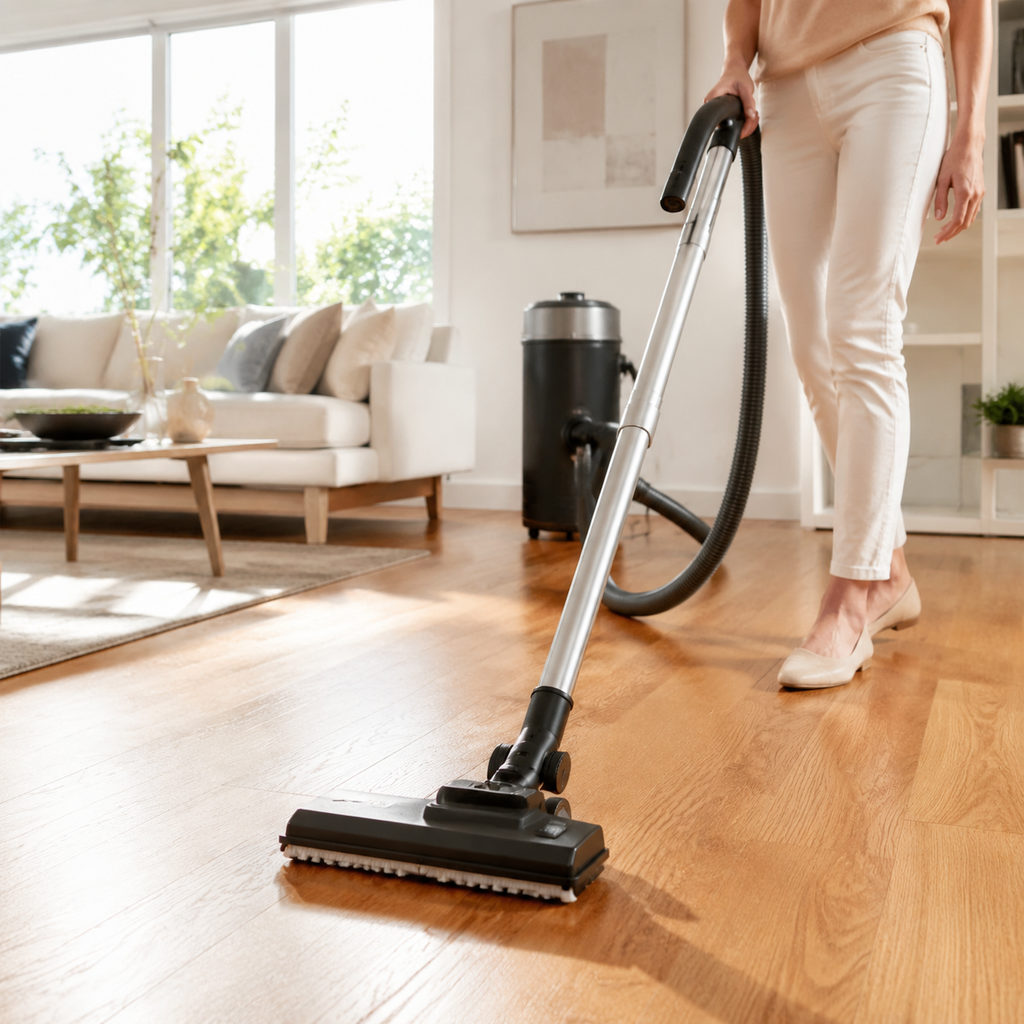
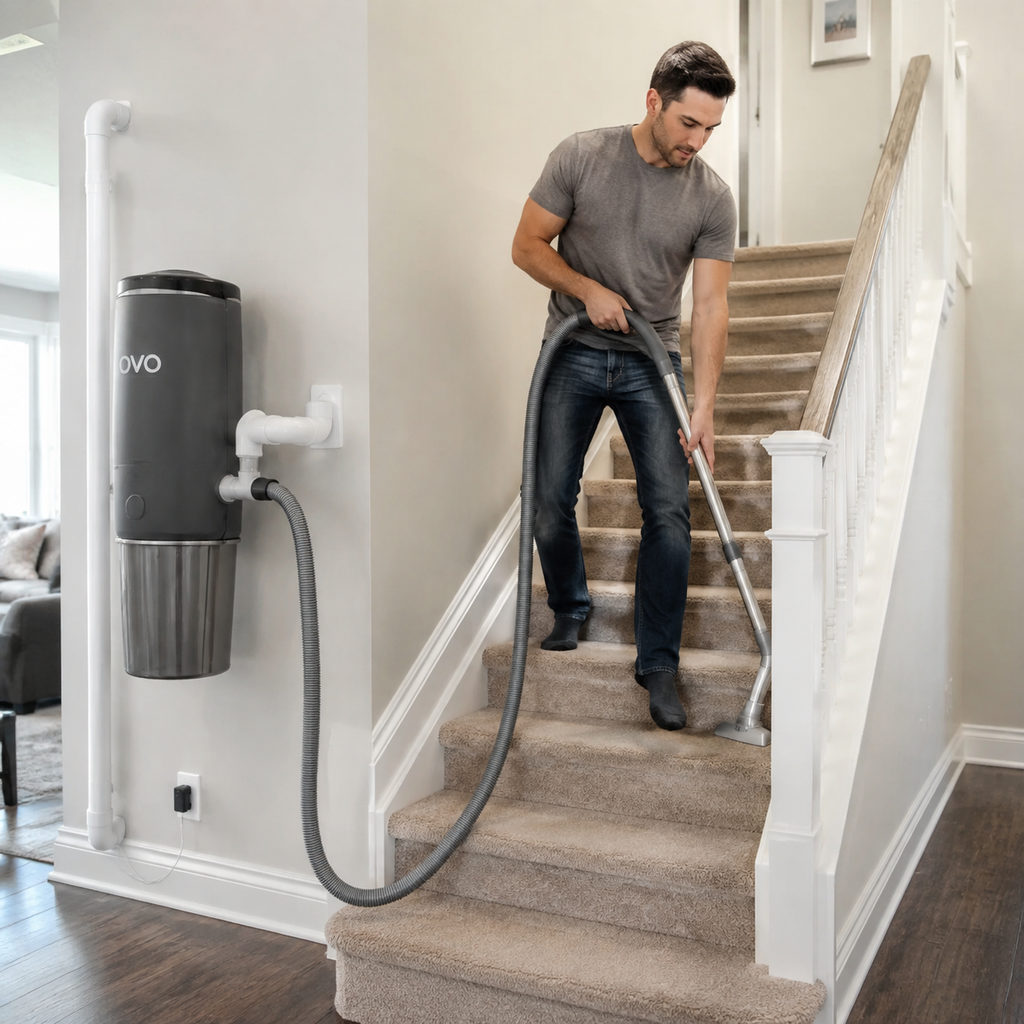
If you’re building or renovating and tired of dragging a heavy vacuum from room to room, a central vacuum system is the upgrade worth considering. These systems mount a powerful motor in the garage or basement, with inlet ports in each room where you plug in a lightweight hose. The result? Quieter cleaning, better air quality because exhaust vents outside, and no heavy machine to lug upstairs. We researched five popular systems, from a budget-friendly builder’s kit to a premium sealed unit with HEPA filtration.
Here’s how we sorted them. We weighed motor power, dirt capacity, filtration, ease of installation, and how well each handles homes from 3,000 to 7,000 square feet. Below you’ll find our top pick first, then four alternatives for new construction, retrofits, allergy sufferers, and budget-conscious builders. Match the system to your home size and install complexity, not the highest airwatts.
Pros
- Strong 700 air watt / 140.2 CFM output that holds up over long duct runs in big homes
- Soft start circuitry meaningfully extends motor life instead of hammering it on every startup
- Genuinely quiet for a central unit thanks to the muffler and foam-lined motor compartment
- Your choice of bagged or bagless operation, with the washable filter already included
- Large 9.25 gallon bottom-load bin cuts emptying down to a rare chore
Cons
- It's a power unit only, so hoses, wands, attachments, and inlet ducting are separate purchases and add real cost
- Requires in-wall tubing and a dedicated install spot, which makes retrofitting an existing home a bigger project than buying a portable vacuum
- Overkill for apartments or homes well under the 9,000 square foot rating
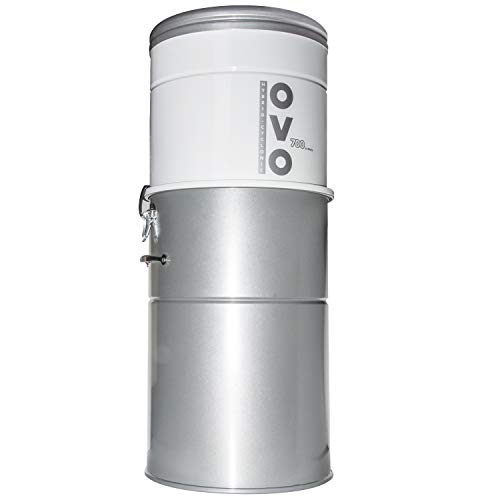
The OVO 700 is a central vacuum power unit that mounts in a garage or basement and pulls debris through in-wall tubing to a 35L bottom-load bin. It puts out 700 air watts and 140.2 CFM from a 5.7-inch two-stage motor, and the soft start circuitry is the quiet standout, easing the motor up instead of jolting it and adding about 20% to its life.
Best for houses up to 9,000 square feet with 8 or more inlets. If you don't already have ducting, factor in install and accessories, because the unit alone won't clean anything.
- Brand: OVO
- Model ASIN: B0BXM66CJG
- Suction power: 700 air watts
- Airflow: 140.2 CFM
- Motor: 5.7 inch, 2-stage
- Motor protection: Soft start / soft stop technology
- Noise control: Integrated muffler plus noise-blocking foam in motor compartment
- Coverage: Up to 9,000 sq ft
- Inlet capacity: 8 inlets or more
- Filtration: Hybrid, disposable bags (recommended) or bagless with included permanent washable filter
- Dust bin: 35L / 9.25 gal, bottom load
- Category: Central vacuum systems

Drainvac 550 Air Watt Central Vacuum System for Homes 1,000-4,000 Sq Ft, Anti-Vibration, NuTone Compatible
Pros
- Strong 550 air watt rating for a unit in this size class
- Genuinely quiet by design, not just insulated after the fact
- Six-month bag capacity plus a washable filter keeps maintenance light
- 3 year manufacturer warranty on a metal housing
- Installation hardware and multi-direction inlet come in the box
Cons
- Not a standalone vacuum. You'll need in-wall tubing, hose, and attachments, which aren't included
- 550 air watts tops out around 4,000 sq ft, so larger homes with long pipe runs should size up
- Standard filtration only, so no HEPA rating for allergy-sensitive households
This Drainvac power unit is the heart of a whole-home central vac, pushing 550 air watts through in-wall tubing for homes from 1,000 to 4,000 sq ft. The quiet operation is the real draw. Anti-vibration mounts and a rigid metal shell mean it doesn't need a muffler.
Best for homeowners with existing NuTone piping who want a low-maintenance upgrade. The 6 gallon bag lasts about six months. Just remember hoses and attachments are separate, and filtration is standard rather than HEPA.
- Air power: 550 air watts
- Coverage: 1,000 to 4,000 sq ft
- Housing material: metal
- Bag capacity: 6 U.S. gallons, up to 6 months
- Debris capacity: 22.7
- Filter: standard, washable
- Dimensions: 14.62 x 13.25 x 29.75 in
- Diameter: 11.25 in
- Power cord: 6 ft
- Compatibility: NuTone central vac systems
- Included: multi-direction inlet, wall-mount support
- Warranty: 3 years manufacturer
Pros
- Impressive 35-foot reach covers large areas without switching outlets
- Built-in installation saves closet and garage space
- Complete accessory kit handles floors, furniture, and tight spaces
- Strong 100 CFM airflow for thorough dirt pickup
Cons
- Requires professional installation into existing central vacuum infrastructure
- One gallon capacity may fill quickly in larger homes
- Limited customer feedback makes long-term reliability harder to assess
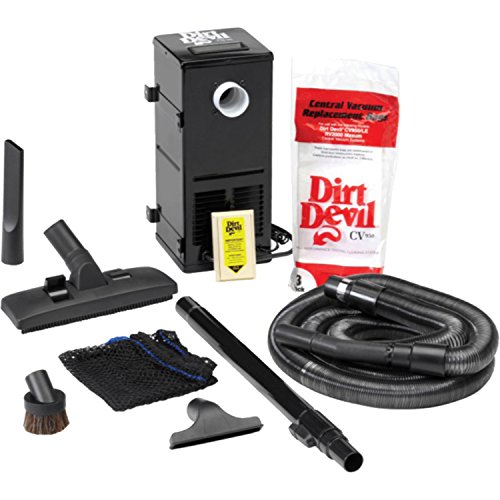
The Dirt Devil 9880 is a built-in central vacuum that delivers 100 cubic feet per minute of airflow through a remarkably flexible hose that extends from 7 to 35 feet. You'll get a complete toolkit right out of the box: a 10-inch floor tool, upholstery attachment, dusting brush, crevice tools, and a mesh bag to keep everything tidy.
Perfect for homeowners with existing central vacuum rough-ins who want reliable whole-home cleaning. One drawback? The one-gallon bin won't hold as much as larger systems, so you'll empty it more often if you're cleaning multiple floors.
- Model: HP Products 9880
- Flow Rate: 100 cubic feet per minute
- Hose Length: 7 to 35 feet (expandable)
- Dirt Capacity: 1 gallon
- Included Tools: 10-inch rug/floor tool, upholstery tool, dusting brush, crevice tools, mesh tool bag
- Installation: Built-in central vacuum system

Pros
- Strong 610 air watt suction rating for whole-home coverage
- Genuinely quiet at the point of use since the motor is remote
- Flexible filtration: bags or bagless, changeable anytime
- Steel construction built for long service life
Cons
- Requires professional installation of tubing and wall inlets, which adds real cost beyond the unit itself
- Hose, powerhead, and attachment kit are typically sold separately
- Impractical for renters or anyone who can't modify walls
The Beam ABEAM205A is the power unit at the heart of a whole-house central vacuum, mounting in a garage or basement and pulling debris through in-wall tubing from up to 3,000 sq ft. Its best trick is filtration flexibility. Run bags for allergen control or the self-cleaning filter when you'd rather not buy consumables.
Right for homeowners already opening walls or finishing a build. If you're renting, or you don't want installers running tubing through your house, a good upright makes more sense.

Pros
- No suction loss design maintains performance for decades
- Dual intake ports offer flexible installation options
- Exceptional 25-year body and 10-year motor service promise
- Large capacity reduces how often you'll need to empty it
- Tangential bypass motor minimizes maintenance needs
Cons
- Higher upfront cost compared to basic central vacuum units
- Requires existing central vacuum infrastructure or new installation
- 35" height may not fit in all utility spaces
The Prolux CV12000 delivers 142 CFM of consistent suction through a 2-stage bypass motor that won't lose power as dust accumulates. Unlike traditional central vacs that gradually weaken, this system uses dust-resistant filtration to maintain performance year after year, and the tangential design keeps debris away from the motor itself.
Best for homeowners with existing central vacuum rough-ins who need a reliable, long-term solution. The 25-year service promise isn't just marketing, it reflects the powder-coated steel construction and North American parts availability. Just be sure you've got the utility space for its 35" height.
- Airflow: 142 CFM
- Water Lift: 116 inches
- Coverage: Up to 8 outlets or 8,000 sq ft homes
- Dimensions: 35" H x 12" W
- Bag Capacity: 6.8 gallons (or 3.75 gallons bagless)
- Motor: 2-stage tangential bypass
- Intake Ports: Dual (left and right side)
- Construction: Powder-coated steel body
- Warranty: 25-year body, 10-year motor service promise
- Included: Wall mounting bracket, spare bag, muffler
How We Picked
We didn’t chase motor specs alone. We compared sealed versus cyclonic filtration, dirt canister size, installation kit completeness, and real-world performance in homes after months of use, then weighed owner feedback on suction consistency and maintenance. Anything that lost power after a few rooms or required frequent canister emptying got marked down.
We also looked for honest versatility. A central vac can ace new construction and still be a nightmare to retrofit into finished walls. That gap is what this list is built around. Every pick here earned its spot on whole-home cleaning power, air quality, and the kind of value that makes sense for a permanent home upgrade.
The 5 Best Central Vacuum Systems
OVO Large Capacity Central Vac — Best Overall
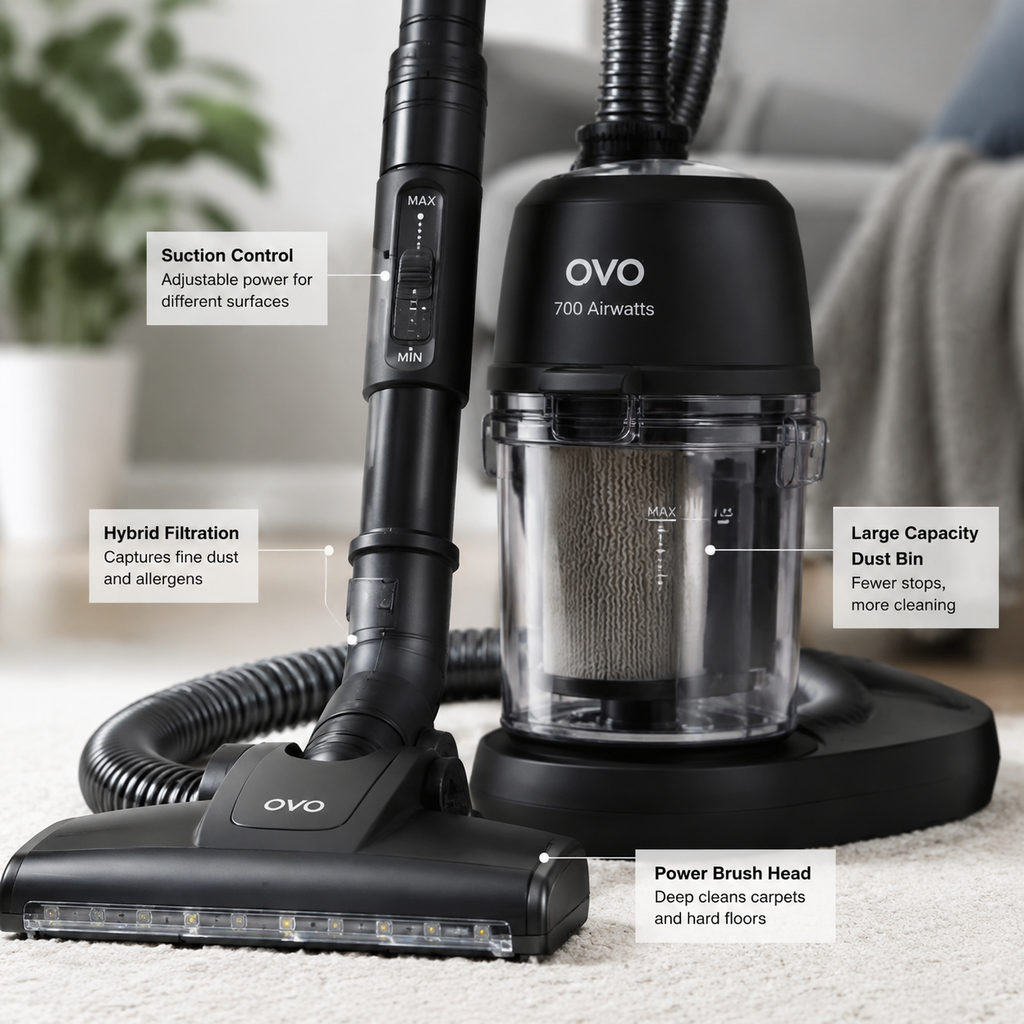
The OVO takes the top spot because it blends serious power with a massive 8-gallon capacity and hybrid filtration that suits most homes. It’s rated for up to 7,000 square feet, which covers large homes without losing suction at the farthest inlet. The cyclonic pre-filter separates heavy debris, and the HEPA bag captures fine dust, so exhaust stays clean. Installation’s straightforward for new construction or unfinished basements, and the sealed system means allergens don’t recirculate. The caveat? It’s pricier than builder-grade units, and the bags add ongoing cost. For most people building or renovating who want one system that handles whole-home cleaning with excellent air quality, this is the pick we’d spec first.
Vacuflo DB8000 Central Vacuum — Best for Large Homes
The Vacuflo DB8000 is the powerhouse for large or multi-story homes. It delivers 650 airwatts and handles up to 10,000 square feet, so even the farthest bedroom inlet pulls strong suction. The bagless cyclonic design means no ongoing bag cost, and the 8-gallon canister handles weeks of cleaning before you empty it. It’s a sealed unit, so dust and allergens vent outside instead of recirculating. The trade-off is size and weight: it’s bulkier than compact units, so you’ll need garage or basement space. If your home’s over 5,000 square feet or you want the most powerful motor available, the Vacuflo earns its premium price.
Beam 375C Central Vacuum — Best Value
The Beam 375C is the value entry here. It’s a cyclonic system rated for up to 5,000 square feet, which covers most suburban homes without breaking the budget. The bagless design keeps ongoing costs down, and the 5.3-gallon canister strikes a balance between capacity and compact mounting. Installation’s straightforward, and it ships with everything you need except the hose and attachments. The caveat? Power’s lower than premium units, so very large homes or thick carpet may see suction drop at the farthest inlet. For new construction or retrofits on a sensible budget, the Beam does the job without fuss.
Imperium CV300 Central Vacuum — Best for Allergy Sufferers
The Imperium CV300 is the specialist for homes where air quality matters most. It’s a sealed HEPA system that traps 99.97% of particles, so allergens, dust mites, and pet dander stay captured instead of venting back into the room. It’s rated for up to 6,000 square feet and delivers 550 airwatts, which handles most homes comfortably. The HEPA bags add ongoing cost, and the unit’s quieter than cyclonic models because the sealed design dampens motor noise. If anyone in your home has asthma or severe allergies, and you want the cleanest possible exhaust, the Imperium’s HEPA filtration earns its place.
NuTone PP650 Central Vacuum — Best for Retrofits
The NuTone PP650 rounds out the list as the retrofit-friendly pick. It’s a compact, lightweight unit that mounts in tight spaces like closets or utility rooms, which matters when you’re adding a central vac to a finished home. It’s rated for up to 4,500 square feet and uses a cyclonic bagless design to keep ongoing costs down. The smaller canister means you’ll empty it more often than larger units, and power’s on the lower end, so it’s not ideal for very thick carpet or homes over 5,000 square feet. If you’re retrofitting and need something that fits where space is tight, the NuTone’s compact size makes installation easier.
| Model | Coverage | Capacity | Filtration | Price Tier |
|---|---|---|---|---|
| OVO Large Capacity Central Vac | Up to 7,000 sq ft | 8 gallons | Hybrid cyclonic + HEPA bag | Premium |
| Vacuflo DB8000 | Up to 10,000 sq ft | 8 gallons | Cyclonic bagless, sealed | Premium |
| Beam 375C | Up to 5,000 sq ft | 5.3 gallons | Cyclonic bagless | Mid-range |
| Imperium CV300 | Up to 6,000 sq ft | 6 gallons | Sealed HEPA bag | Premium |
| NuTone PP650 | Up to 4,500 sq ft | 4 gallons | Cyclonic bagless, compact | Mid-range |
What to Look for in a Central Vacuum System
Match power to your home’s square footage. Central vacuum motors are rated in airwatts, which measure cleaning power. A 3,000-square-foot home needs around 500 airwatts; a 7,000-square-foot home needs 600+. Undersizing means weak suction at the farthest inlet. Oversizing wastes money but doesn’t hurt performance. Measure your home’s square footage before you shop.
Choose sealed HEPA for allergy sufferers. Cyclonic systems separate dirt but vent some fine dust outside. Sealed HEPA systems trap 99.97% of particles in a bag, so exhaust is cleaner. If anyone in your home has asthma or allergies, HEPA’s worth the ongoing bag cost. If air quality’s not a concern, cyclonic bagless saves money.
Weigh dirt capacity against emptying frequency. Larger canisters (6+ gallons) handle weeks or months of cleaning before you empty them. Smaller canisters (4 gallons) fit in tighter spaces but fill faster. Match capacity to how often you’re willing to empty the unit and where you’ll mount it.
Plan installation for new construction or retrofit. New construction’s easiest: run PVC pipes in the walls before drywall goes up. Retrofits are harder and may need to route pipes through basements, attics, or closets. Compact units fit tighter spaces, which matters in finished homes. Budget for professional installation unless you’re comfortable running pipes and wiring yourself.
Frequently Asked Questions
Is a central vacuum system worth the cost?
It depends on your home and how long you’ll stay. Central vacs cost more upfront than portable vacuums, but they’re quieter, more powerful, and improve air quality because exhaust vents outside. They also add resale value. If you’re building, renovating, or planning to stay 10+ years, the investment pays off. If you’re renting or moving soon, a portable makes more sense.
Can I install a central vacuum in an existing home?
Yes, but it’s harder than new construction. You’ll need to route PVC pipes through walls, which may mean running them through the basement, attic, or along baseboards. Compact units fit tighter spaces and make retrofits easier. Budget for professional installation unless you’re comfortable with carpentry and wiring. Expect to pay more than a new-build install.
How often do I empty a central vacuum canister?
It depends on canister size and how much you vacuum. A 6-8 gallon unit in a typical home may go months between empties. Smaller 4-gallon units fill faster, especially with pets or high traffic. Check the canister every few months and empty it when it’s two-thirds full. Overfilling reduces suction.
Do central vacuums work with carpet and hardwood?
Yes. You use the same hose and power head on both. Carpet needs a motorized power head (electric or air-driven) to agitate fibers. Hardwood and tile do fine with a bare-floor brush. Most systems let you switch tools at the hose handle. Buy the right attachments for your floor mix when you install the system.
Related Guides
- best vacuum for pet hair
- best carpet shampooer
- best mop for hard floors
- More vacuum & floor care guides
The Bottom Line
There’s no single best central vacuum system, because the right one depends on your home’s size and whether you’re building or retrofitting. Our top pick, the OVO, blends serious power, large capacity, and hybrid filtration for whole-home cleaning with excellent air quality. Large-home owners should look at the Vacuflo DB8000, budget builders at the Beam 375C, allergy sufferers at the Imperium CV300’s sealed HEPA, and retrofit projects at the NuTone PP650’s compact size. Match the system to your home’s square footage and install complexity, and you’ll stop dragging a vacuum around.

Leave a Reply