
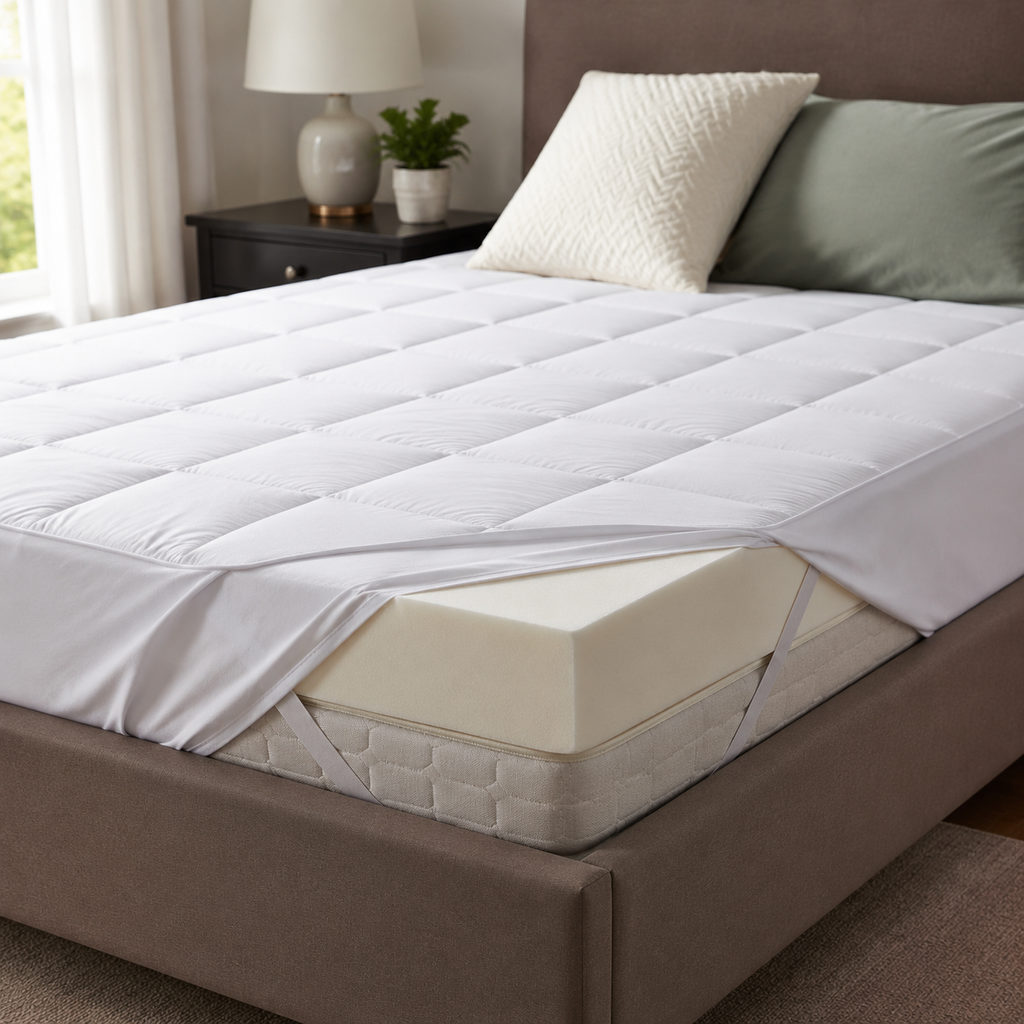
Your shoulder is the loosest joint in the body, and lying on your side puts a narrow band of body weight straight through it. So the best mattress topper for shoulder pain works in the opposite direction from anything you’d buy for a bad back. A firm surface pushes the joint up into itself and holds it there. It needs to drop instead, further than a hip drops, until the load spreads across your upper arm and ribs rather than sitting on one bone. Firmer is wrong here. We compared five Queen-size foam pads that owners buy for shoulder pressure, and the softer-surfaced ones finished ahead.
Here’s the part almost nobody mentions. Change the topper and you have also changed the pillow you need. If the shoulder sinks an extra inch into the bed, your head has effectively dropped an inch relative to your spine, so the pillow that felt right last month bends your neck the other way. People add a plush pad, wake with a worse neck, and blame the pad. Every product here is Queen, which keeps sizing simple, though depth runs from a 3-inch slab up to a 5-inch dual layer. Order follows the Amazon ratings, because the badge on each card is built from them.

ViscoSoft 3 Inch Select High Density Memory Foam Mattress Topper, Queen, Gel-Infused Cooling Pressure Relief
Pros
- Dense foam construction resists the sagging you get with lighter toppers
- Gel infusion genuinely helps with temperature regulation
- Uniform block design avoids the uneven support of carved foam toppers
- Solid option for pressure point and back pain relief
- Risk-free 60-day return window
Cons
- Medium-firm feel won't work for people who prefer a soft, cloud-like topper
- No review data yet, so real-world durability claims aren't verified by buyers
- Memory foam toppers like this can carry an initial off-gassing smell
Three inches of plain memory foam in Queen, no zoning and no sculpted face. It creeps under steady load, so a shoulder keeps settling instead of being held at the depth it landed on.
Highest rating of the group. No gel or ventilation is quoted, so it sleeps warm, and a heavy sleeper will compress most of the 3 inches.
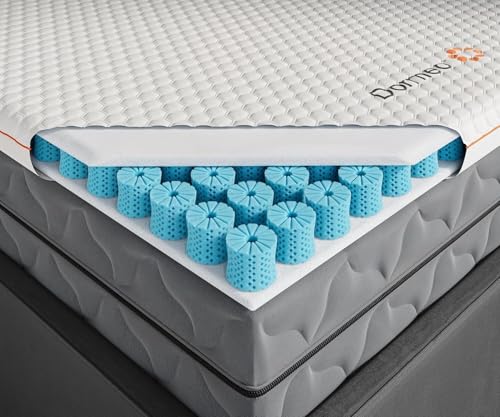
Dormeo Premium Queen Breathable Mattress Topper with Octaspring Technology, 3-Zone Support
Pros
- Targeted 3-zone support addresses hip and back discomfort
- Straps and anti-slip base prevent sliding during sleep
- Breathable materials help with temperature regulation
- Softens to medium firmness over time for a more personalized feel
Cons
- Feels notably firm out of the box, won't suit those wanting instant softness
- No customer reviews yet, so real-world durability is unproven
- At $371, it's a significant investment for a topper rather than a new mattress
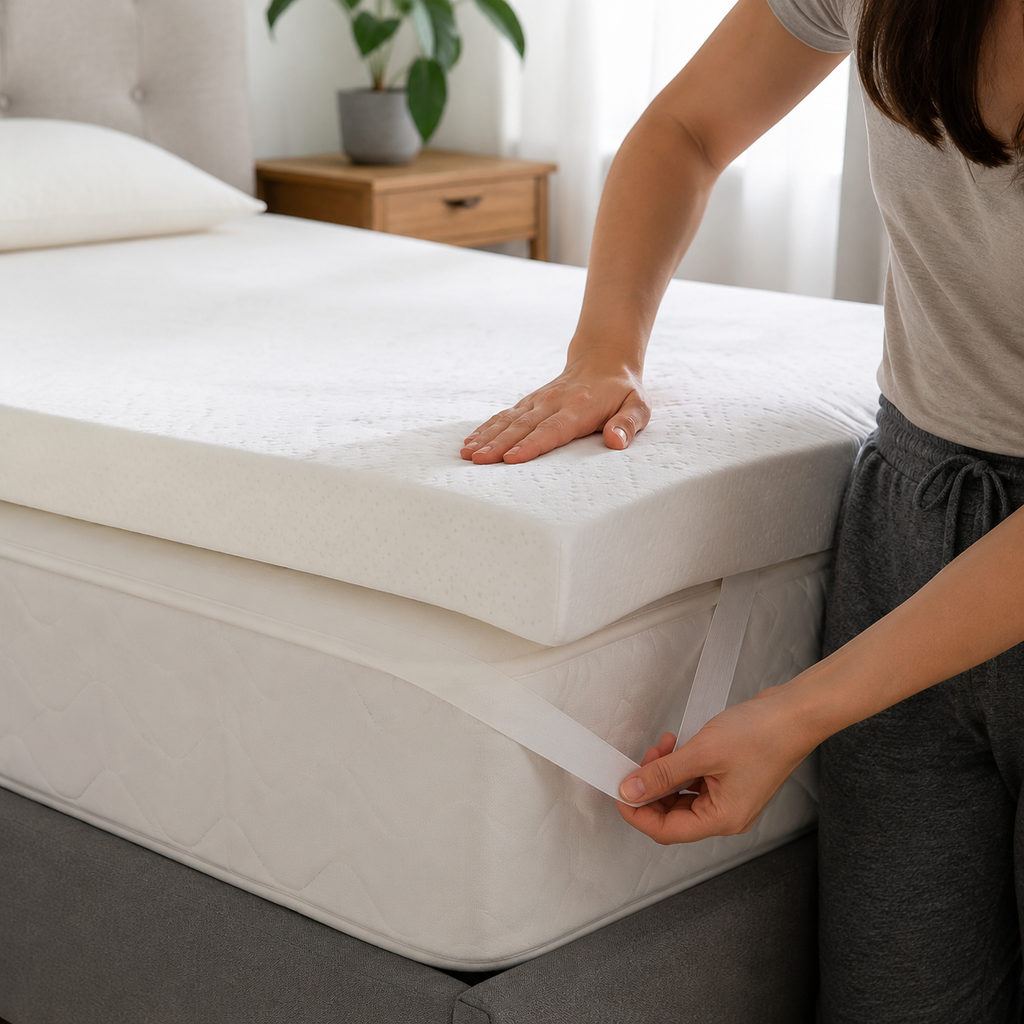
The priciest pad here, sold on breathability and a core Dormeo names Octaspring. Air moves through it better than through a solid slab, which helps where a shoulder sits under constant pressure.
The listing states no thickness, no density and no zone count, so sink depth is a surprise on delivery. A spring-style core also rebounds sooner than memory foam.
Pros
- Dual-layer foam targets pressure points at the shoulders, hips, and lower back
- Cooling memory foam helps offset the heat retention that's common with standard foam toppers
- Deep pocket and elastic skirt keep it anchored, even with a partner moving around
- Certified foam and cover materials add peace of mind for skin sensitivity
- Washable cover simplifies long-term care
Cons
- No customer reviews yet, so real-world durability and comfort claims aren't independently confirmed
- Needs 24 to 48 hours to fully expand, so it's not an instant fix
- Medium-firm support may not suit sleepers who prefer a softer, sink-in feel
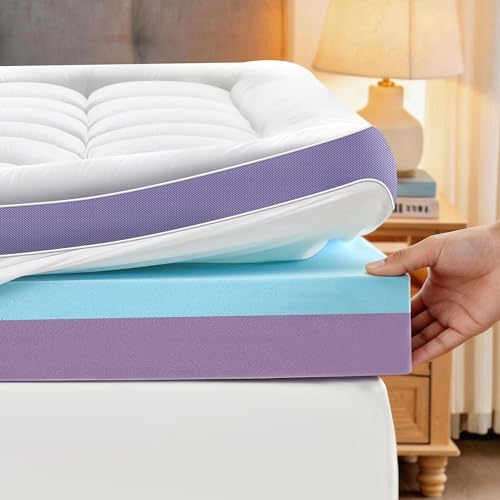
Five inches in layers: a 2-inch pillow top over 2 inches of support foam, plus an inch of cooling memory foam. The shoulder meets the soft part, the firm part stops you reaching the mattress.
That depth raises the bed by nearly half a foot, so ordinary fitted sheets won't reach and your current pillow will sit too tall. No foam density is published.

Pros
- Generous 1700 GSM memory foam fill provides substantial cushioning
- Bamboo cover and air layer keep sleepers cool through the night
- Elastic pocket system prevents shifting on various mattress heights
- Budget-friendly price point for queen size
- OEKO-TEX certification ensures non-toxic materials
Cons
- No customer reviews yet to verify performance claims
- Requires 24-48 hours to fully expand after unpacking
- Spot cleaning only, can't machine wash the entire topper
The cheapest option here, aimed in its own title at side sleepers and hot sleepers. Owner feedback says it does soften a hard bed and runs cooler than most budget foam.
The listing names neither a thickness nor a foam type, so you can't work out how much foam you're buying. No removable cover either.
Pros
- Substantial 3-inch thickness adds noticeable comfort and pressure relief
- Washable cover with anti-slip backing stays securely in place
- CertiPUR-US and OEKO-TEX certifications ensure quality materials
- High-density foam construction provides durability and support
Cons
- Requires 48-72 hours to fully expand after unpacking
- Cold temperatures can extend the expansion time needed
- Not designed for standalone use, requires an existing mattress
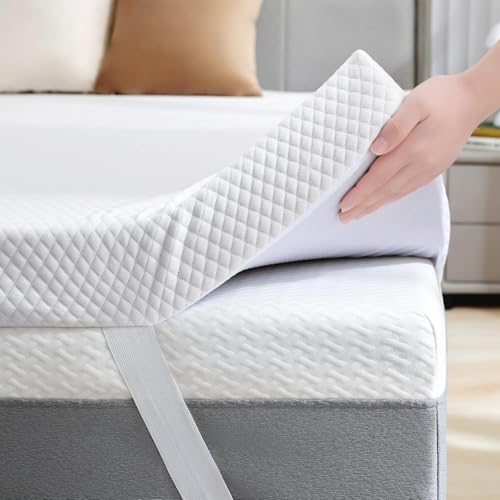
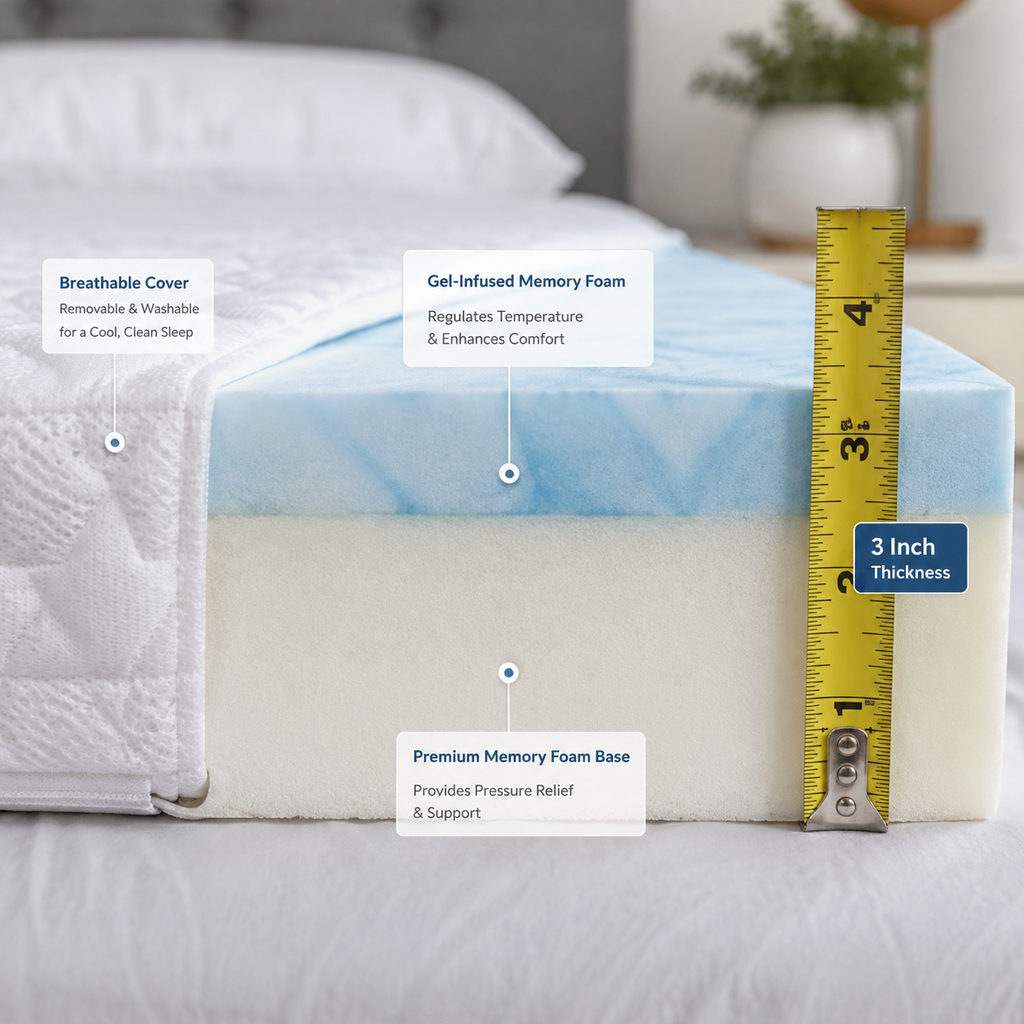
Best-documented listing of the five: 3 inches of gel memory foam, ventilation through the slab, CertiPUR-US certification and a removable cover you can wash.
High density is the catch. It resists bottoming out, and it also stops a shoulder sinking as far as it wants. Lowest rating here, and owners report slow off-gassing.
Type: 3-inch ventilated gel memory foam, high density
Size: Queen
Feature: CertiPUR-US certified, removable washable cover
Best use: Already-soft beds that still need support
How We Picked for Shoulder Pressure
Surface softness came first, since it’s the one property that decides whether a shoulder gets anywhere. A pad that resists on contact keeps the joint high, which is the complaint people are trying to escape, so anything marketed on support alone dropped down the list. Depth mattered next. Foam compresses to a fraction of its stated thickness under a joint carrying that much weight across so little area, and 3 inches is roughly where a shoulder stops feeling the old mattress through the pad. We don’t own these toppers and won’t pretend we slept on them. Ratings and owner feedback did the sorting instead.
Construction broke the ties. A single soft slab and a dual-layer build feel similar for the first minute and completely different by morning, because the layered one has firm foam underneath to catch you before you reach the mattress. Only one pick here is built that way. We also noted what each listing publishes and what it quietly skips, since two of these five never state a thickness at all, and any number in a title is a manufacturer claim rather than a measurement. Shoulders and hips rarely complain alone, so our guide to the best mattress topper for side sleepers covers the whole-body version of this question.
Best Mattress Topper for Shoulder Pain, Reviewed
ViscoSoft 3-Inch Queen — Best Overall for Shoulder Sink
ViscoSoft keeps this plain, and plain is what a shoulder wants: 3 inches of memory foam in Queen, nothing molded or channeled into the face of it. Memory foam creeps under a steady load instead of pushing back the way latex or a spring unit does, so the joint keeps settling for the first several minutes after you lie down rather than being parked where it landed. That behavior is the reason this one leads. Its 4.7 average is the highest of the five, gathered over a listing old enough for the sample to mean something, and the wording printed on the box is Pain & Pressure Relief, which reads as marketing rather than measurement. The limits are honest ones. Three inches is generous for most people and thin for a heavy sleeper, who’ll compress most of it and start feeling the mattress below. Soft memory foam also holds heat, and this listing quotes no gel infusion and no ventilation to move it along.
Dormeo Octaspring Queen — Best Airflow, Priciest of the Group
Dormeo’s is the outlier, and by a wide margin the priciest thing on this page. The listing name sells breathability and a structure Dormeo calls Octaspring, not depth: no thickness figure appears in it anywhere, which is odd for a topper and the first question we’d want answered before ordering. Heat is where it earns the money. A shoulder pressed into soft foam is a small patch under constant pressure, which is precisely where warmth collects, and a breathable core shifts more of it than a solid slab will. Rated 4.6, second only to the ViscoSoft here. The reservations are easy to list. You’re paying premium money for a pad that publishes neither a thickness nor a density figure, so how far your shoulder actually drops is something you learn after delivery. Queen only. If the name means what it sounds like, a spring-style core pushes back sooner than creeping foam does, which is the wrong direction for a joint you want the bed to swallow. Buy this one for airflow first.
SurChic 5-Inch Dual Layer — Deepest Sink Without Bottoming Out
Five inches, split into layers, and that’s the cleverest build here for a shoulder. SurChic quotes a 2-inch pillow top over 2 inches of support foam, with an inch of cooling memory foam in the stack, so the soft part is where your shoulder meets the bed and the firm part waits underneath to catch you before you reach the mattress. It answers the usual objection to plush toppers, which is that they run out of foam halfway through the night. The listing points it at side sleepers and guest rooms, and 4.5 across the reviews backs that up. Then the awkward part. Five inches lifts your sleeping surface by nearly half a foot, so ordinary fitted sheets won’t stretch over it and the pillow in your cupboard is almost certainly too tall on night one. Budget for both. Printed on the listing is Back Pain Relief, a different job from the one we’re describing, and no foam density is given for either layer.
NightHug Queen Topper — Cheapest Way to Try the Idea
Cheapest pick by a distance, and the listing tells you the least of any here. NightHug names its audience in the title, side sleepers and hot sleepers, without naming a thickness or a foam type or a certification, so you’re buying on owner feedback rather than on paper. That feedback is respectable for the money. A 4.2 average on a budget pad generally means it does soften a hard bed, and enough owners mention sleeping cooler on it that the hot-sleeper line isn’t hollow. Reasonable first move if you aren’t yet sure a topper is your answer. What it can’t offer is room. A thin pad squashes to almost nothing beneath a joint loading that small a footprint, and with no depth stated you can’t work out beforehand how much foam you’re getting. There’s no CertiPUR-US listed and no removable cover mentioned either, so a spill means scrubbing the foam itself and waiting for it to dry. Treat it as a trial.
SINWEEK 3-Inch Ventilated Gel — Most Documented, Firmest Surface
Last on rating at 4.0, with the fullest spec sheet of the five. SINWEEK quotes 3 inches of gel memory foam, ventilation through the slab, CertiPUR-US certification, and a removable soft cover that goes in the wash, which is more than any pick above it puts in writing. High density is also in that title, and there’s where it parts company with this article. Density that stops a pad bottoming out is the same density that stops a shoulder sinking as far as it would like. So read this as the firm choice: sensible if your mattress is already soft and you want gel and airflow without losing support underneath, less sensible if a hard bed is what’s shoving your shoulder up. The 4.0 average is the weakest number on the page, and owner complaints gather around foam that feels stiffer than the photos suggest and a smell that takes longer than a week to clear. Ventilated, certified, washable. Just not soft.
| Model | Stated Depth | Surface Feel | Best For | Price Tier |
|---|---|---|---|---|
| ViscoSoft 3-Inch Queen | 3 in memory foam | Slow-creeping, soft on contact | Most side sleepers with a sore shoulder | Mid-range |
| Dormeo Octaspring Queen | Not stated | Springier, high airflow | Warm sleepers who overheat in foam | Premium |
| SurChic 5-Inch Dual Layer | 5 in total: 2 in top, 2 in base, 1 in gel | Plush over firm | Heavier sleepers needing depth | Mid-range |
| NightHug Queen Topper | Not stated | Light softening | Trying a topper cheaply | Budget |
| SINWEEK 3-Inch Ventilated Gel | 3 in gel memory foam | Firm, high density | Soft beds that still need support | Budget |
Shoulder Sink, Loft and Pillow Height
The shoulder needs to sink further than any other pressure point. A sagging bed under your pelvis is a spine argument, answered with denser foam. A hip is a bony point that wants controlled sink, which is why our mattress topper for hip pain shortlist leans on zoned pads. The shoulder is a third case again. It’s the most mobile joint you have, it carries weight it was never designed to carry when you’re on your side, and a firm surface pushes it up into the socket instead of letting the bed take the arm. Soft at the surface, supported below.
A new topper resets the pillow you need, and most people miss this. Head height is measured from your spine, not from the floor. Drop the shoulder an inch deeper into a plush pad and your head has effectively risen an inch above the line of your neck, so yesterday’s correct pillow now cranks your head toward the ceiling. That’s the neck ache people report after their first week on a new topper, and it isn’t the foam’s fault. Go one loft thinner than you were using, or switch to an adjustable shredded-fill pillow you can empty by handfuls until your ear, shoulder and hip line up flat.
Dual layers solve the problem a single soft slab creates. Soft foam all the way through does what you want for four minutes and then keeps going, so you end up resting on the mattress with a squashed pad in between. A layered build puts the give at the top and the resistance underneath, which is how the SurChic gets away with 5 inches. Anyone past roughly 200 pounds should look there first. Under about 150 pounds, a plain 3-inch slab still has foam left once you’ve compressed it.
Expect two weeks of adjustment, and check the sheet situation before you order. Foam ships vacuum-rolled, needs a few days to reach the thickness on the box, and wants an open window while the smell fades. Your body needs longer than that to stop noticing a changed surface, so judging anything on night two is pointless. Deep-pocket sheets are effectively mandatory past 3 inches. If shoulder pain wakes you most nights or has been hanging around for weeks, see a doctor instead of buying another pad.
Frequently Asked Questions
Should a topper for a sore shoulder be firm or soft?
Soft at the surface. A firm pad holds the shoulder high and keeps the joint compressed, since it can’t spread the load anywhere. What you want is give on contact with something supportive lower down, so the shoulder settles and your ribs and waist still have foam under them. Firmness belongs on a bed that sags, which is a different complaint.
How thick should the best mattress topper for shoulder pain be?
Three inches is the practical floor for an average-sized adult, because a shoulder drives a long way into foam before anything stops it. Two inches barely registers. Four or five inches gives the most room to sink and works best when the extra depth is layered, with softer foam on top and firmer foam beneath it.
Do I really need a different pillow after adding a topper?
Usually, yes, and thinner rather than thicker. Your shoulder now sits lower in the bed, so the gap between your head and the mattress has shrunk and the old pillow overfills it. Lie down and have someone look at you from the front: your ear should sit in line with your spine, not tipped up or down. If your chin is dropping toward your chest, the pillow is too tall now.
Can a topper help if my mattress already sags where I lie?
Not much. Foam follows the shape underneath it, so a dip in the mattress becomes a dip in the topper, only softer. A pad can rescue a bed that’s too hard. It can’t rebuild one that’s collapsed, and on a sagging mattress a plush topper often makes the shoulder situation worse rather than better.
Related Guides
- best cooling pillowcase
- best ergonomic seat cushion
- best knee pillow for side sleepers
- More sleep & comfort guides
The Bottom Line
The ViscoSoft 3-Inch Queen is the one we’d hand a friend first. It’s the highest-rated pick here, plain memory foam creeps under load the way a shoulder needs, and 3 inches is enough depth for most people without turning bedmaking into a project. Heavier sleepers, or anyone who has already flattened a soft pad, should go to the SurChic 5-Inch Dual Layer for the firm base under the plush top, then buy deep sheets and a thinner pillow in the same order. If you sleep hot and the money isn’t the issue, the Dormeo Octaspring Queen breathes better than anything else on the page, with the caveat that it never tells you how thick it is. The SINWEEK 3-Inch Ventilated Gel is the firm, well-documented option for a bed that’s already soft. And the NightHug Queen Topper is a cheap way to find out whether a topper is your answer at all. Give whichever you pick two weeks before you judge it.

Leave a Reply