
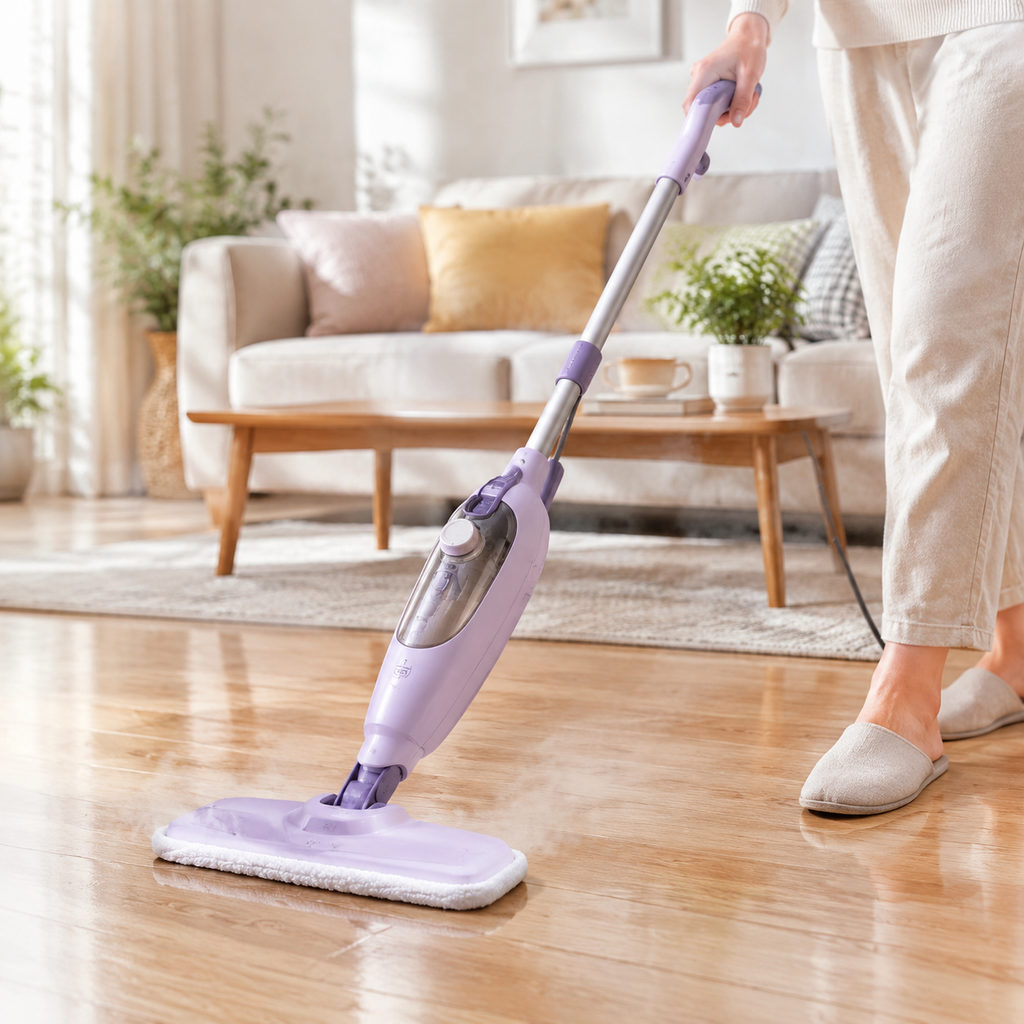
Finding the best steam mop for tile floors means chasing two things: heat and grip. Hot steam loosens grime baked into grout, and a good microfiber pad lifts it away instead of smearing it around. Tile takes steam well, since sealed hard surfaces shrug off moisture that would warp raw wood. We researched five models, from a lightweight 6-in-1 that doubles as a handheld steamer to a scrubbing mop built for stubborn, set-in stains.
Here’s how we sorted them. We looked at heat-up time, steam output, tank size, cord length, and how well each pad grabs dirt out of grout lines. Below you’ll find our top pick first, then four alternatives for deep grout cleaning, tough stains, tight budgets, and multi-surface jobs. Pick the one that matches your floor plan and how much scrubbing you’d rather skip.

Pros
- Fast 15-second heat-up and 30-minute runtime per fill
- Unusually long 23-foot cord for a steam mop in this class
- Handheld conversion plus five attachments handles bathrooms, kitchens, and upholstery, not just floors
- Tank detaches for easy refilling
- Dual steam settings for different floor types
Cons
- Only for sealed hard floors, so unsealed hardwood, laminate seams, and waxed surfaces are off limits
- The listing quotes a 350ml tank in the title and 400ml in the features, so actual capacity isn't clear
- Corded design, and SQKMYSU is a little-known brand with no long-term owner feedback to draw on yet
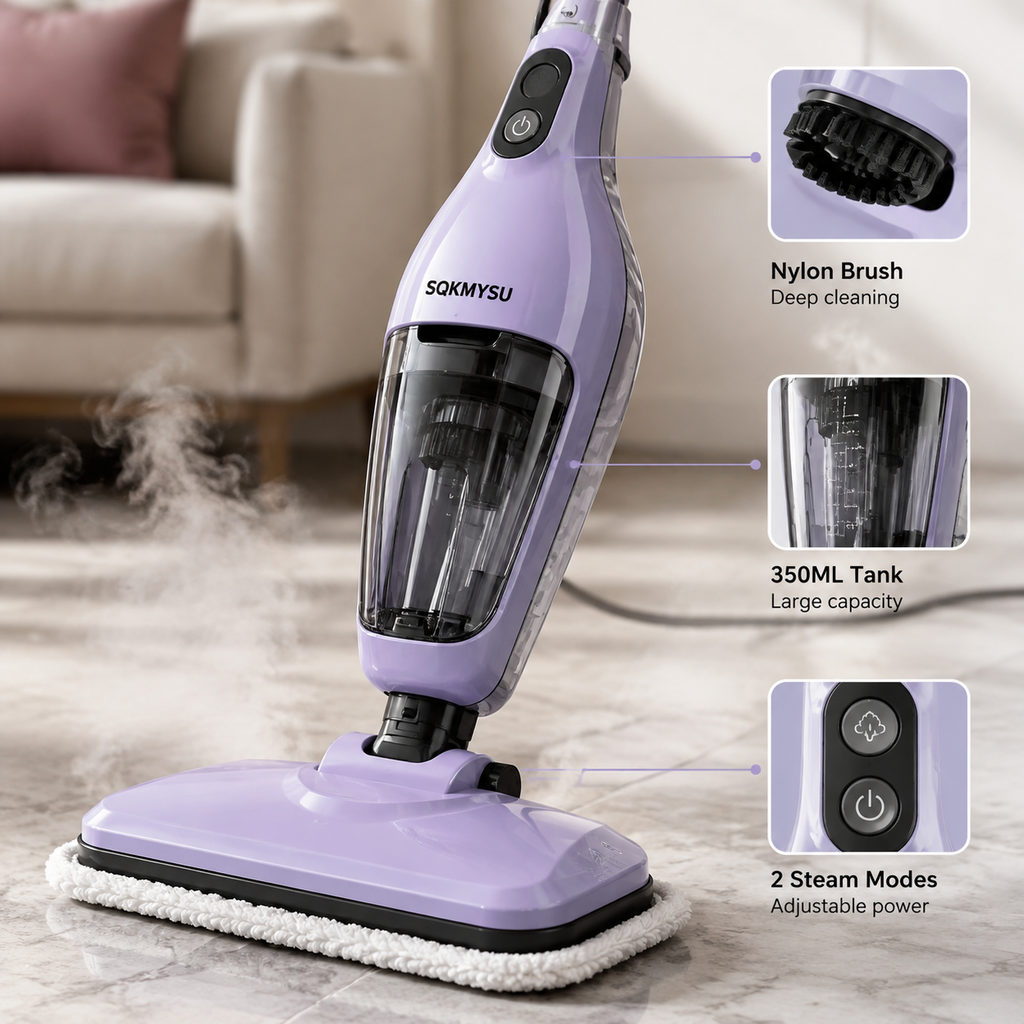
The SQKMYSU heats in about 15 seconds and the detachable handheld steamer stretches its reach to grout, walls, and furniture. The 23-foot cord means you're not chasing outlets across a big kitchen.
It's lightweight and easy to steer around islands, and the 350ml tank covers a good run of tile. The tank's smaller than a dedicated floor unit and the attachments take a moment to swap, but for versatile, streak-free cleaning, it's tough to beat.

BISSELL PowerFresh 1940A Steam Mop with Built-In Scrubber, 3 Steam Settings & 23' Cord for Hardwood & Tile
Pros
- Chemical-free sanitization is safer for kids and pets
- Flip-down scrubber handles tough spots without bending or extra tools
- Long cord and large tank mean less stopping and starting
- Washable pads save money and reduce landfill waste
Cons
- Not suitable for unsealed hardwood or unfinished surfaces
- Scent discs are optional and sold separately
- May require multiple passes on heavily soiled floors
The Bissell PowerFresh 1940A pairs variable steam control with a built-in scrubber, so you can crank output for grimy grout lines then ease off for sealed tile. The 12-inch path covers ground fast.
Natural sanitization skips chemicals, and the scrub strip earns its keep on textured tile. The cord's a bit short and the tank needs refills on big jobs, but for reviving gray grout, it's a standout.

Pros
- Powered scrubbing action handles dried food, sticky spots, and shoe scuffs without pre-soaking
- Steam-only cleaning means no chemical residue on floors kids and pets crawl across
- Mode selection prevents oversteaming delicate sealed surfaces during light cleanups
- Headlights genuinely help under cabinets and along baseboards
Cons
- Hard floors only, so you'll still need a vacuum or carpet cleaner for rugs and carpet
- Pads need rinsing or laundering after every session, and they wear out over time
- Sanitizing claims only hold if you follow the specific Owner's Guide procedure, it isn't automatic
- Corded steam mops mean tank refills and outlet hunting on larger floor plans
The Shark Steam & Scrub S8001 goes after stuck-on messes with dual-sided washable pads that rotate as you clean, always presenting a fresh surface instead of pushing dirt around.
Steam output stays strong, lifting set-in stains that a passive mop would smear. The 13-ounce tank runs small and the cord's shorter, but for tile fighting grease and tough stains, the rotating pads do work that usually needs a scrub brush.
Pros
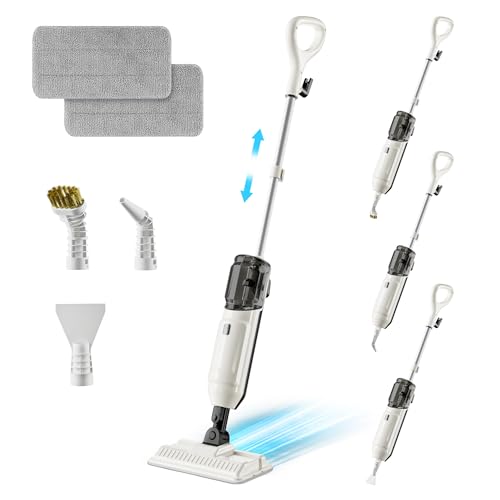
- Very fast heat-up at 15 seconds to 260°F
- Chemical-free cleaning is friendly to kids, pets, and sensitive noses
- Swivel and tilt head reaches under low furniture that most mops miss
- Includes 2 washable pads plus 3 handheld attachments, no extra purchase needed
- Lightweight with adjustable height, easier on the back than wringing a wet mop
Cons
- A 16.9oz tank is fine for a couple of rooms but light for whole-house cleaning in one pass
- Corded operation means you're managing 20 feet of cable and hunting outlets
- Not suitable for carpet, unsealed hardwood, or waxed floors, and customer feedback is still thin
The Wotaste hits 260°F steam in about 15 seconds, matching pricier mops on heat-up, and its 16.9-ounce tank is the largest here, so you'll refill less on big tile jobs.
It handles hardwood and tile and stays light enough to steer easily. There's no handheld attachment or rotating pad, and the accessory kit's thin, but for streak-free tile cleaning at a friendly price, it nails the core job.
Pros
- Fast 20-30 second heat-up time saves you from waiting around
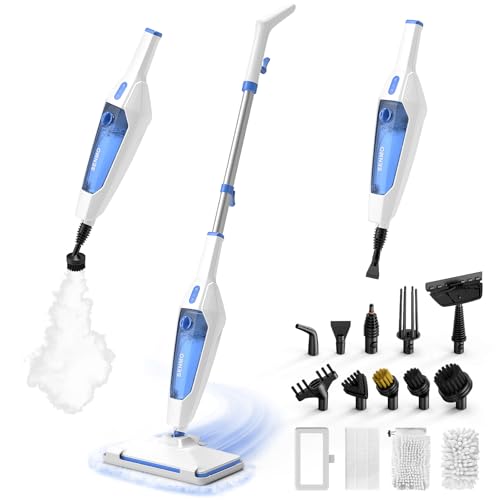
- Detachable handheld design adds serious flexibility for countertops, windows, and car interiors
- Generous accessory kit means you won't need to buy extra attachments
- No harsh chemicals required, just tap water and heat
- Long cord and decent tank capacity reduce interruptions during cleaning
Cons
- Zero customer reviews yet, so real-world durability is unproven
- 400mL tank might need frequent refills for larger homes
- Steam-only cleaning won't tackle all stain types as effectively as chemical cleaners
The SENMO 14-in-1 is the do-everything pick. Its detachable design and stack of attachments clean tile, then switch to grout brushes, upholstery tools, and window squeegees without grabbing another gadget.
On tile it heats in about 20 seconds with steady steam. The 12-ounce tank is modest and the 16-foot cord's the shortest here, but if you want one tool that reaches far beyond the floor, the kit stretches your money across the house.
- Heat-up time: 20-30 seconds
- Maximum steam temperature: 228°F
- Water tank capacity: 400mL
- Continuous steam duration: Up to 26 minutes
- Power cord length: 16 feet
- Steam modes: Dual (low and high)
- Accessories: 14-piece set including nylon brush, stainless steel brush, gap tool, nozzles, window cleaner, microfiber pads, ironing brush
- Compatible surfaces: Hardwood, tile, stone, vinyl, marble, laminate, carpet
- Cleaning method: Water-only, chemical-free steam
How We Picked
We didn’t lean on marketing claims. We compared heat-up speed, steam volume, tank capacity, cord reach, and pad quality across each mop, then weighed real owner feedback on grout cleaning and durability. Anything that leaked, cooled off fast, or left streaks got marked down. Heat-up and tank size get judged together, because a mop that reheats in 15 seconds still stops you dead if the tank runs dry halfway across a kitchen. We also read each listing for what it leaves out. Several never publish a heat-up figure, and some skip tank size or pad count entirely. A missing spec is real information before you hand over money.
Convenience matters as much as cleaning power. A steam mop that takes two minutes to heat or drips water everywhere isn’t worth the hassle. So we prioritized models that heat quickly and hold enough water for a full room. Pads got their own look, since they do the actual lifting. We checked how many arrive in the box and whether they survive repeated machine washing. A pad that goes limp after ten cycles turns into a running cost. One more filter: the floor itself. Steam suits glazed tile and sealed stone. It’s a bad idea on unsealed stone, and old or unsealed grout takes on water. That’s the bar we held every pick to.
The 5 Best Steam Mops for Tile Floors
SQKMYSU 6-in-1 Steam Mop — Best Overall
The SQKMYSU 6-in-1 earns the top spot for a reason. It heats in roughly 15 seconds, so you’re cleaning almost the moment you plug in, and the detachable handheld steamer reaches grout lines, walls and furniture beyond the floor. At 350ml the tank covers a mid-size kitchen on one fill, and the advertised 23-foot cord means you’re not chasing outlets across a big room. Light enough to steer around islands and chair legs without wearing out your arm. Two caveats. The tank holds less than a dedicated floor unit, so a whole open-plan level means stopping to refill and then waiting out a second heat-up, and the attachments take a moment to swap mid-job. The listing never states how many pads ship in the box either, which matters because a soaked pad stops lifting dirt and starts pushing it around. Keep a dry spare handy. Note the wording on the listing: sealed hard floors. Glazed tile and sealed stone are fine. Unsealed stone isn’t, so skip it there.
Bissell PowerFresh 1940A — Best for Grout
Grout is where the Bissell PowerFresh 1940A does its best work. The built-in scrubber and variable steam control let you crank output for dirt set into grout lines, then dial it back for a light refresh on sealed tile. The 12-inch cleaning path covers ground quickly, and the natural sanitization means you’re cutting grime without pouring chemicals on the floor. Heat-up runs around 30 seconds, a touch slower than our top pick. The scrub strip pulls its weight on textured tile. Where it frustrates: the listing never quotes a cord length, and owner feedback says the reach is short enough that one kitchen socket won’t cover a long room without an extension. The 16-ounce tank also empties before a big tile floor is done, so you’re refilling and waiting on reheat again. Pads survive repeated machine washing, though the fibers mat down and lose their bite after a few months. Wrong buy if your tile is old and the grout is crumbling or unsealed, since water works straight into it.
Shark Steam & Scrub S8001 — Best for Stains
Shark’s Steam & Scrub S8001 goes after stuck-on messes with an all-in-one scrubbing design. The dual-sided washable pads rotate as you clean, so a fresh surface keeps meeting the tile instead of one loaded pad pushing dirt around. That’s a genuine edge on kitchen tile that’s seen spills and foot traffic. Steam output stays strong and steady, and the pads lift set-in stains a passive mop would smear. Owner feedback puts heat-up near 30 seconds, though the listing itself never quotes a figure, and it doesn’t state a pad count either. Two real drawbacks. The 13-ounce tank is small for the job this mop is built for, so a greasy kitchen floor often means a refill mid-clean plus a wait for reheat, and it’s the priciest of this group. The rotating pads also need washing after nearly every use, and they take longer to dry than a flat pad, so you’re washing them the same evening if you clean daily. Wrong buy for a small bathroom, where the scrubbing head is overkill.
Wotaste Steam Mop — Best Budget
Wotaste covers the basics well without asking much of your wallet. The listing quotes 260°F steam in 15 seconds, matching pricier models on heat-up, and the 16.9-ounce tank is the largest in this group, so most kitchens finish on one fill instead of stopping halfway. It handles hardwood and sealed tile alike, and it’s light enough to steer with one hand. What you give up: there’s no handheld attachment and no rotating pad, so grout lines above the floor stay your problem, and the accessory kit is thin next to premium picks. The listing never states cord length or how many pads come in the box. Owners who run tap water through it report scale building inside the tank after a few months, which chokes steam output long before anything actually breaks, so fill it with distilled water from day one. For straightforward, streak-free tile at a friendly price it does the core job, and first-time buyers won’t feel short-changed.
SENMO 14-in-1 Steam Mop — Best Multi-Surface
Fourteen pieces in one box is the whole pitch, and the SENMO delivers on it. The detachable body cleans tile, then switches to grout brushes, upholstery tools, window squeegees, without you reaching for another gadget. That range is rare at a mid-range price. On tile it heats in about 20 seconds and holds steam steadily enough for a streak-free finish. Then you hit the compromises. The 12-ounce tank is the smallest here, so an open-plan floor means two refills and two waits for reheat, and the 16-foot cord doesn’t reach far, which bites in a kitchen where there’s one socket by the door. Swapping among that many attachments takes fiddling, and the listing doesn’t say how many of the 14 pieces are actually washable pads, so you may be buying spares sooner than you expect. Owner feedback also flags weaker steam once scale forms inside the boiler, so run distilled water through it. Wrong buy if all you own is tile and you want the simplest mop on this list.
| Model | Heat-Up | Tank Size | Best For | Price Tier |
|---|---|---|---|---|
| SQKMYSU 6-in-1 Steam Mop | ~15 seconds | 350ml (11.8 oz) | Versatile all-around use | Mid-range |
| Bissell PowerFresh 1940A | ~30 seconds | 16 oz | Deep grout cleaning | Mid-range |
| Shark Steam & Scrub S8001 | ~30 seconds | 13 oz | Stubborn stains | Premium |
| Wotaste Steam Mop | ~15 seconds | 16.9 oz | Budget cleaning | Budget |
| SENMO 14-in-1 Steam Mop | ~20 seconds | 12 oz | Multi-surface jobs | Mid-range |
What to Look for in a Steam Mop for Tile Floors
Check heat-up time and steam output. The best steam mops hit cleaning temperature in 15 to 30 seconds, so you’re not standing around waiting. Strong, consistent steam is what loosens grime from grout, and variable controls let you match output to the mess, more for set-in dirt, less for a light daily refresh.
Match tank size to your floor plan. A small 12-ounce tank is fine for a bathroom or galley kitchen, but large open-plan tile means frequent refills. Look for 16 ounces or more if you’re cleaning big areas in one go. Bigger tanks add weight, so balance capacity against maneuverability.
Prioritize pad quality and attachments. Microfiber pads do the actual lifting, so washable, replaceable pads save money over time. Scrub strips and rotating pads help on textured tile and grout. Detachable handheld steamers and grout brushes add value if you want one tool for more than just the floor.
Consider cord length and weight. A short cord means unplugging and replugging as you move room to room. Look for 20 feet or more to cover a kitchen without hunting for outlets. Lightweight builds are easier to steer around islands and furniture, especially on longer cleaning sessions.
Frequently Asked Questions
Can steam mops damage tile floors?
Not sealed tile. Ceramic and porcelain handle steam well, since the sealed surface repels the moisture that would warp raw wood. Avoid using a steam mop on unsealed stone or damaged grout, where moisture can seep in. When in doubt, check your flooring manufacturer’s guidance first.
Do I need to sweep before using a steam mop?
Yes. A steam mop lifts stuck-on grime and sanitizes, but it isn’t built to pick up loose crumbs, hair, or grit. Sweep or vacuum first so the pad glides over clean tile instead of smearing debris around and clogging up fast.
Are steam mops safe for grout?
Generally, yes, as long as the grout’s sealed and in good shape. Steam actually excels at loosening dirt from grout lines that a regular mop misses. Models with a scrub strip or dedicated grout brush clean textured grout even better. Skip steam on cracked or crumbling grout.
Should I use distilled water in a steam mop?
Yes, if you want the mop to keep its steam. Tap water leaves mineral scale inside the boiler, and that scale narrows the steam path until output fades, often within a few months on hard water. Distilled water avoids it. Plan on spare pads too, since matted-down fibers are what wears out first on every mop here, and a soaked pad smears dirt instead of lifting it.
How often should I steam mop tile floors?
Once a week suits most homes, with high-traffic kitchens and entryways benefiting from more frequent passes. Bathrooms can go weekly too. Between deep steam cleans, a quick sweep or dry mop keeps loose dust from building up in the grout lines.
Related Guides
- best vacuum for high-pile carpet
- best robot vacuum and mop
- best handheld vacuum
- More vacuum & floor care guides
The Bottom Line
There’s no single best steam mop for tile floors, because the right one depends on your floor plan and how much scrubbing you’d rather avoid. Our top pick, the SQKMYSU 6-in-1, pairs quick heat with a long cord and a handheld head that reaches grout and walls. Gray grout lines point to the Bissell PowerFresh. Set-in kitchen grease, the Shark Steam & Scrub. A tight budget, the Wotaste. The SENMO stretches furthest past the floor itself. Two things matter more than the badge on the handle. Keep spare pads on hand, since a soaked pad smears dirt instead of lifting it, and fill with distilled water so scale doesn’t choke steam output a few months in. Check your floor, too. Glazed tile and sealed stone take steam fine. Unsealed stone and crumbling grout don’t, and no mop here changes that. Sweep first, then steam, and your tile holds a streak-free shine with less elbow grease.

Leave a Reply