
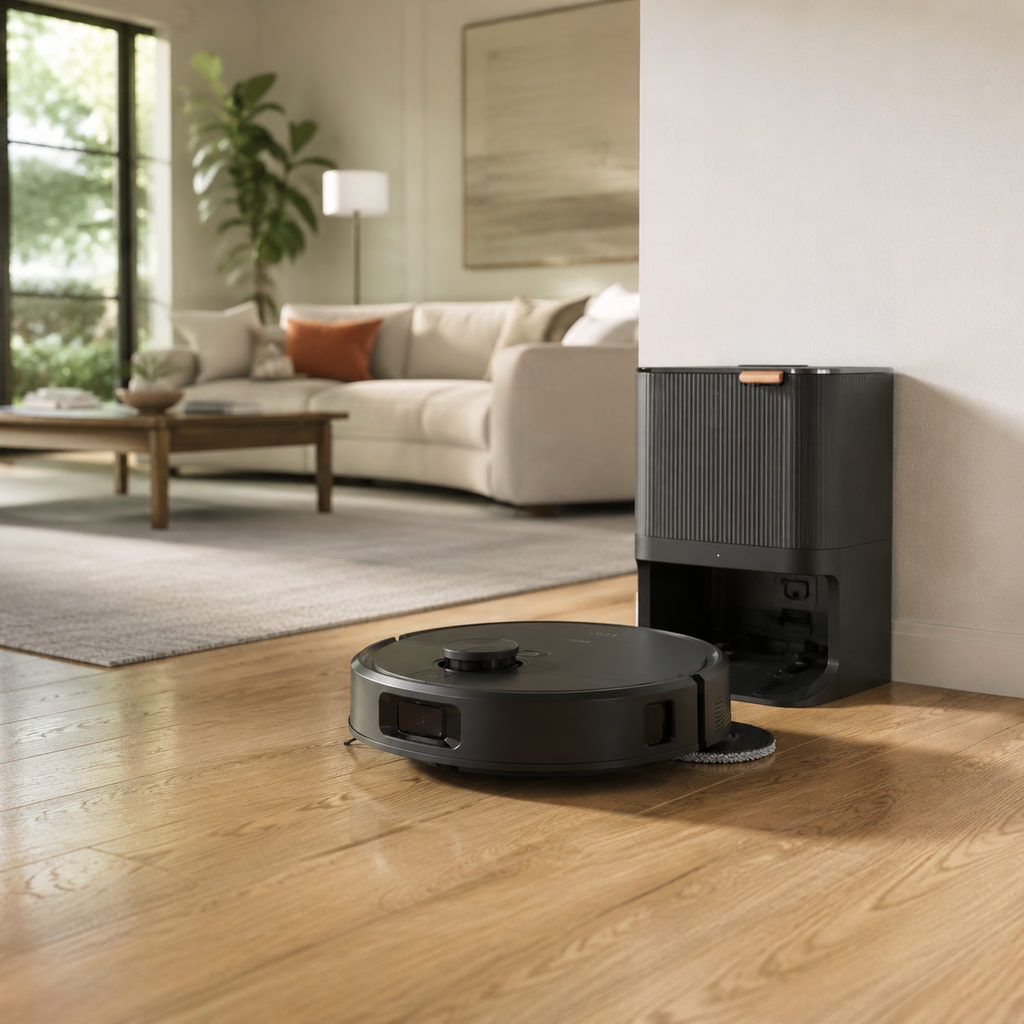
The best robot vacuum and mop is the one that does both jobs well enough that you stop doing either by hand. That’s a lower bar than the marketing suggests. A robot vacuum mop combo, which is what the boxes on a shop shelf actually say, pulls dust with suction, then follows with a damp pad that loosens fresh spills, and for a kitchen floor that gets sticky every single day, that’s genuinely useful. It will not strip dried grout haze or sanitize anything with steam. Five hybrids made this list, ordered by owner rating, from a Roomba that washes its own pads down to two budget units costing a fraction of it.
Two things separate the good ones from the frustrating ones: how much water the tank holds, and what happens to the dirty pad once the run ends. A machine that parks with a wet gray pad still attached has handed the chore right back to you. So has one that runs dry halfway across an open-plan kitchen. Each pick below gets its real weakness listed next to its strengths, plus a note on how it deals with the carpet problem every hybrid shares.
Pros
- Truly hands-off maintenance thanks to the self-emptying, self-washing, heated-drying dock
- Obstacle recognition handles pet waste and cords, a real risk in homes with animals or kids
- Dirt-detection learns which rooms get messy fastest and prioritizes them automatically
- Room and zone targeting, 4 suction levels, and voice control via Alexa, Siri, or Google Assistant
Cons
- The AutoWash Dock is bulky and needs a permanent spot with clearance
- Ongoing costs for mop pads, filters, and dock bags add up over time
- Very few user reviews so far, so long-term reliability data is thin
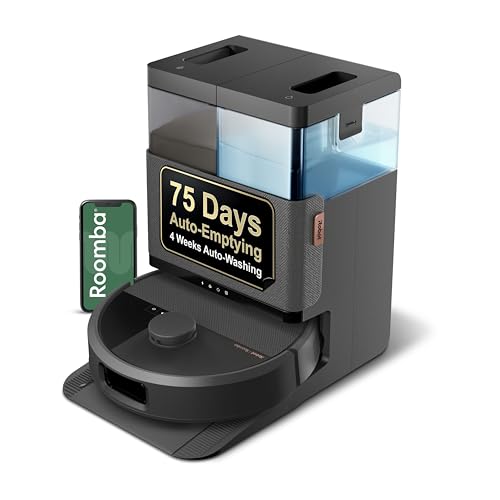
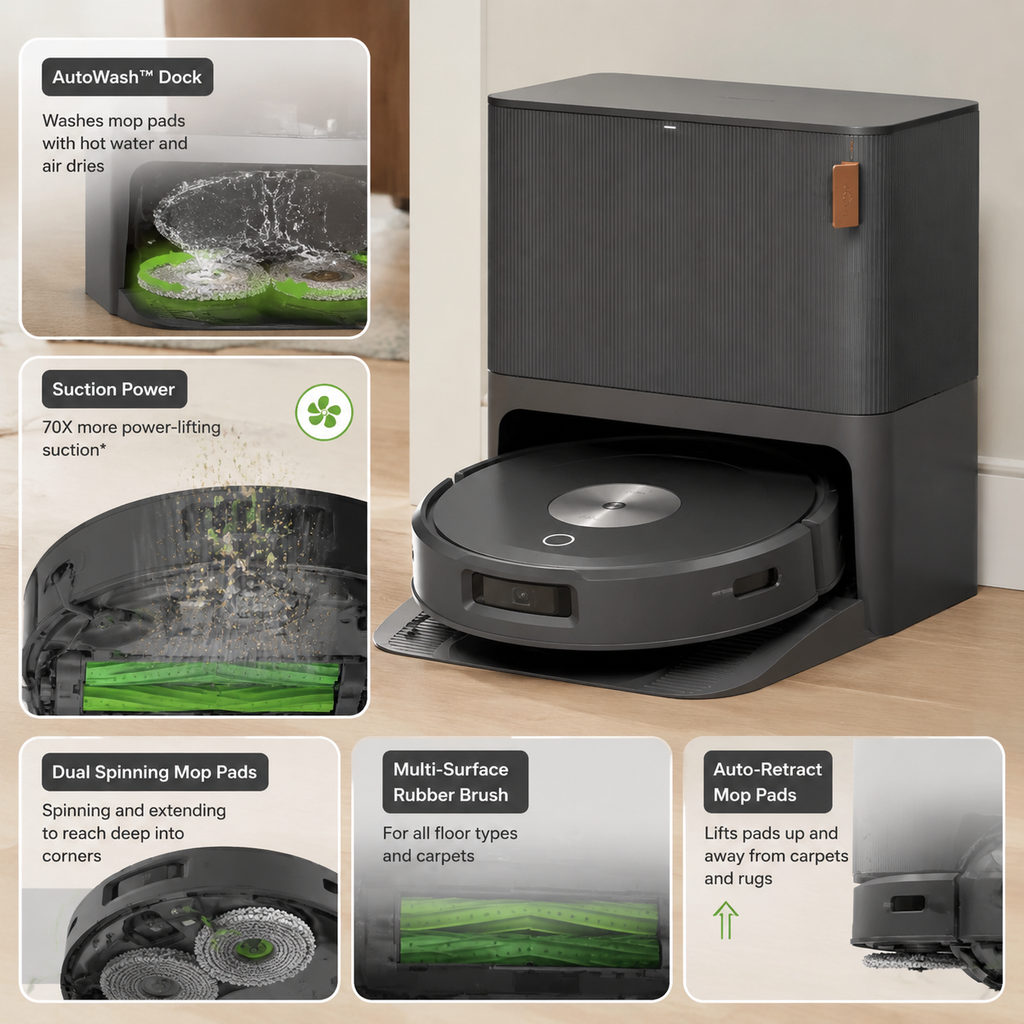
The AutoWash dock rinses the spinning pads and heat-dries them, then empties the bin, so nothing damp waits on your floor. Extending pads reach the baseboard line, and LiDAR keeps the route sane.
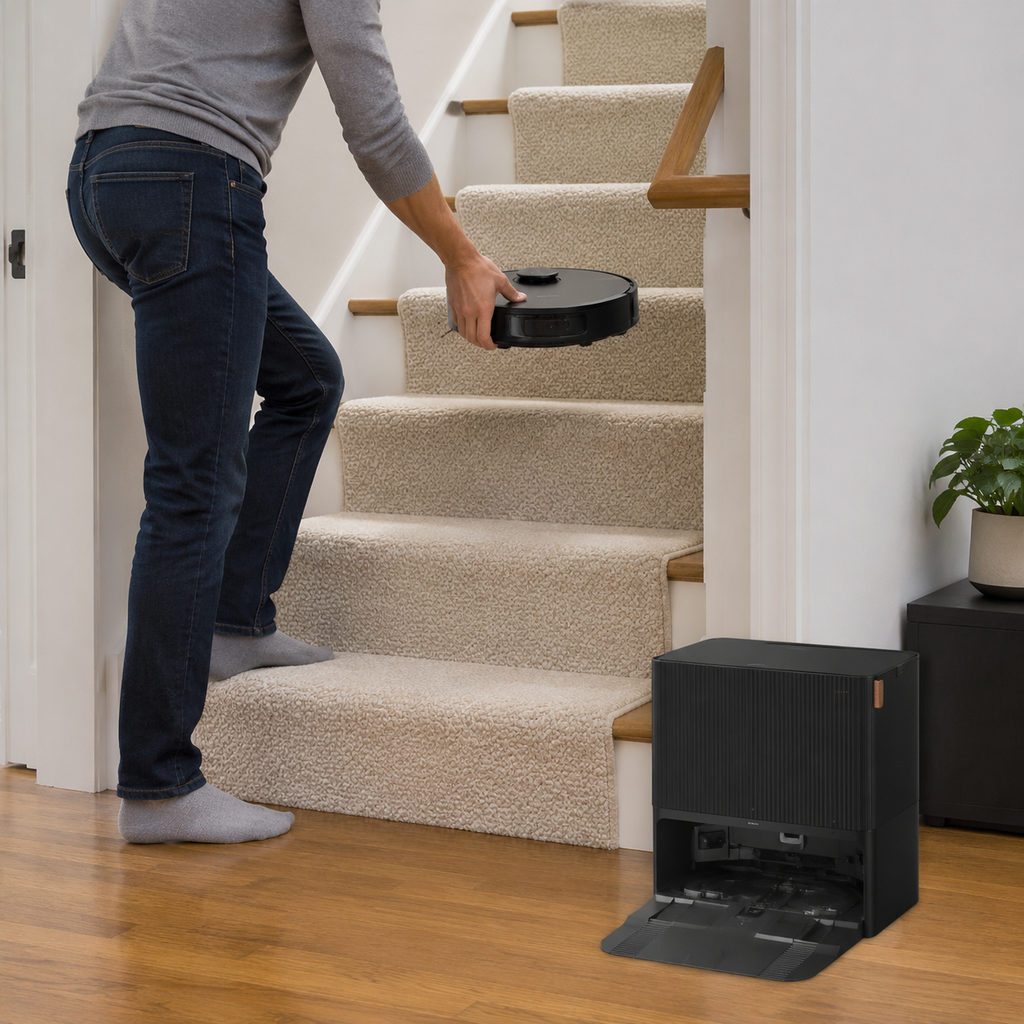
The dock wants real clearance, and the listing makes no promise about lifting pads over carpet. Unclip them before a plush bedroom. Best fit is a mostly hard-floor home where you'd rather not think about floor care.

Shark Matrix Plus 2-in-1 Robot Vacuum & Sonic Mop AV2610WA, Self-Emptying Base, Matrix Clean Grid, Pet Hair, Black/Brass
Pros
- True 2-in-1 cleaning with real scrubbing action, not just a damp pad dragged around
- 60-day bagless base cuts maintenance down to roughly once a month
- Anti-wrap brushroll is built for homes with shedding pets
- App zone control lets you send it after specific messy areas
Cons
- The self-emptying base is tall and wide, so it needs a dedicated spot along a wall
- You'll still refill the water reservoir and rinse the mop pad by hand
- The 30% and 50% improvement figures come from Shark's own comparisons against its older models
Shark's listing is thin on numbers: 2-in-1, black and brass, AV2610WA. Owner feedback points at coverage as the strength, with overlapping passes over the same tile doing the actual mopping work.
You rinse the pad yourself, since no wash dock comes in the box. Fresh grime lifts, set-in stains don't. Reasonable buy for mixed floors if thorough passes matter more to you than dock automation.

Pros
- Genuine scrubbing action from the self-cleaning roller mop instead of a damp pad being dragged along
- Tangle-resistant brush design proven against long human hair and Golden Retriever shedding
- Station automation covers emptying, washing, drying and wastewater, cutting upkeep to about once every couple of months
- Camera-free LiDAR navigation is a real plus if in-home cameras make you uneasy
- At 54.89dB it's quiet enough to run while you're in the next room
Cons
- Premium pricing puts it well above basic robot vacuums, and the station needs meaningful floor space
- No camera means it can miss obstacles smaller than 3x3x3cm, so cords and small toys still need picking up
- The 10.8mm mop lift won't clear thicker or high-pile carpet
- Consumables like the 3L dust bags are an ongoing cost
15,000 Pa is the strongest suction here, and the HydroJet roller mop feeds clean water in while wringing dirty water out, so it isn't pushing its own runoff around a room.
Upkeep is the price you pay. The roller holds water and has to dry, and the dirty tank wants emptying same day. Loud at full power, priciest of the five. Best on sealed hard floors seeing daily traffic.
- Suction: 15,000 Pa with automatic carpet boost
- Mop: 28cm HydroJet roller, 24 water ports, 270 RPM
- Brush: DuoSpiral, handles hair up to 30 cm
- Navigation: LiDAR, camera-free, avoids obstacles 3x3x3cm and larger
- Mop lift: 10.8mm
- Station: auto-empty to 3L bag, mop wash, 50°C hot air drying, wastewater collection
- Hands-free interval: up to 75 days
- Noise level: 54.89dB

Pros
- Strong 2300Pa suction for the price bracket
- Vacuum and mop in one machine, no separate mopping unit needed
- Voice control plus scheduling for genuinely hands-off cleaning
- Runs quietly enough for daytime use around pets
Cons
- Limited to hard floors and low-pile carpet, so thick or plush rugs are out
- Very few owner reviews so far, so long-term reliability isn't clear
- Combined dust box and water tank designs usually mean smaller capacity for both, expect frequent emptying and refills
2300Pa is modest, but hard floors mainly need debris in a bin, and this one manages that quietly. An onboard water tank follows with a damp pad, while Alexa or Google handles scheduling.
Low-pile carpet is the limit, and embedded grit stays put. Navigation is pattern-based rather than mapped. The dust box is small, and the tank runs dry on a big floor. Cheapest way into a hybrid for an apartment.

Pros
- Strong 8000Pa suction for the class, adjustable across four levels
- Brushless intake design avoids the hair-tangle maintenance of roller-brush robots
- Long quiet-mode runtime and reliable self-docking
- Simple controls that older family members can actually use, thanks to the included remote
- Simultaneous mop and vacuum instead of a tank swap
Cons
- Infrared sensors only, so it bump-navigates instead of mapping rooms or saving floor plans
- Wi-Fi setup is limited to 2.4GHz networks and Bluetooth pairing, which trips up some mesh routers
- The flat mop pad and small water tank handle light dust, not dried-on spills or large open floor plans
8000Pa sits in a slim body that clears most couch bases, the spec people wish they'd checked first. Pet hair on hard floors and low-pile carpet is where it looks strongest, and it self-charges.
Thin chassis, thin dust bin. A shedding dog fills it fast. The mop is a drag pad with a small tank, so call it a damp finisher, and the pad comes off before it meets a rug.
- Model: T13S-YY
- Max suction: 8000Pa, 4 levels
- Battery: 2600mAh
- Runtime: 160 min quiet / 100 min standard / 70 min max
- Cleaning modes: Auto, Spot, Edge
- Climb ability: up to 15 degrees
- Connectivity: 2.4GHz Wi-Fi, Bluetooth, Tuya Smart app, Google Assistant, IR remote
- In the box: robot, remote with 2 AAA batteries, charging dock, power adapter, 2-in-1 water tank and dust box, 2 side brushes, manuals
Our Selection Process
We researched spec sheets and owner feedback across the current 2-in-1 field, then held every candidate to the same four questions. Does the water tank last a full floor? Does a dock wash the pad, or do you? Can the machine keep water off rugs without you moving furniture first? And does the suction figure hold up once mopping hardware is bolted on? Anything that answered badly twice got cut before it reached this page.
Ranking follows the Amazon rating, highest first, because the product card on this page shows a score derived from that same rating. No thumb on the scale. One more filter got applied: anything sold as a hybrid but reviewed mainly as a sweeper came off the list, since a machine you’ll never bother filling with water belongs with the best robot vacuum picks instead.
Five Vacuum-Mop Hybrids, Reviewed
iRobot Roomba Plus 505 Combo — Best Overall
Roomba Plus 505 Combo earns the top spot on maintenance, not on raw power. Its AutoWash dock rinses the spinning mop pads and heat-dries them, then empties the dust bin, which means a damp pad never sits on your floor growing a smell between runs. The pads extend past the chassis to reach the baseboard line, and that’s exactly where a drag-pad robot leaves a visible gray stripe. LiDAR mapping plus obstacle recognition keeps it out of the dog bowl. Where it gives ground: the listing makes no promise about lifting those pads over carpet, so plan on unclipping them before it runs a bedroom with a plush rug. The dock is a genuine piece of furniture too, and it wants clearance on both sides. You also keep the clean water reservoir topped up, which is a much smaller chore than rinsing a filthy pad in the bathroom sink, but it’s still a chore. For a mostly hard-floor house and a person who resents floor care, start here.
Shark Matrix Plus AV2610WA — Best for Mixed Floor Plans
Shark keeps this listing unusually spare: a 2-in-1 robot vacuum and mop in black and brass, model AV2610WA. No Pa figure, no wash-dock claim, which tells you where the budget went. Owner feedback says the appeal is coverage rather than gadgetry. It works an area in overlapping passes instead of one lap per room, so a damp pad crosses the same tile two or three times, and that repetition is what actually lifts a dried coffee ring off ceramic. Vacuum pickup on low-pile carpet reads solid in reviews. Mopping is the usual hybrid story, fine on fresh grime and useless on anything set hard. The real catch is the pad. You rinse it yourself, at the sink, and if you forget it after a run you’ll find it stiff the next morning. There’s also less published spec detail here than on any other pick, so part of what you’re buying is Shark’s service record rather than a comparable number.
eufy C28 — Best Scrubbing
15,000 Pa is the headline figure, far and away the biggest in this group. The more interesting hardware is the HydroJet roller mop. Rather than dragging a flat pad through its own dirty water, the C28 feeds clean water onto a spinning roller and scrapes the runoff off as it turns, so the last square foot of a room gets cleaner water than any pad-based robot manages. On sealed tile with dried juice on it, that’s the gap between a smear and a clean floor. Still not steam, though. The roller charges you in upkeep: it holds water, so it has to come out and dry, and the dirty tank wants emptying the same day unless you like surprises. Full suction runs loud enough that you’ll schedule it for while you’re out. This is the priciest of the five, as well. If your floors are sealed hard surface taking real daily traffic, this beats the Roomba.
iMartine Combo — Cheapest Way In
Nobody buys the iMartine for power. 2300Pa is modest, and on hard floors it barely matters, because tile and laminate mostly need debris swept into a bin. This one does that quietly enough to run while somebody takes a call in the next room, then follows with a damp pad fed by an onboard water tank. Alexa and Google Assistant both work with it, and the runtime is long for the class, which counts double on a budget robot with no dock intelligence to fall back on. Now the honest part. Low-pile carpet is the hard ceiling, and even there, embedded grit stays embedded. Navigation is basic pattern work rather than mapping, so expect it to skip a strip and re-cover another. The dust box is small. Its water tank is the smallest here, so expect a mid-run refill. As a first hybrid in an apartment, it’s a lot of function for very little money.
UMMUND Combo — Best Slim Profile
Height is the spec nobody checks until a robot spends a month thudding into the same sofa rail. This one is slim enough to clear most couch bases, and it still pulls 8000Pa, which is more suction than its price tier has any business offering. Pet hair on hard floors and low-pile carpet is where it looks strongest, and it returns to the base to charge without help. Wi-Fi and the app cover scheduling, and there’s a physical remote in the box as well. The weaknesses are the ones a slim budget design implies. A thin chassis means a thin dust bin, so a shedding dog will fill it inside two runs. Mopping comes from a drag pad with a small tank, so treat it as a dust-and-damp finisher, not a scrub. And the pad has to come off before it reaches a rug, because nothing lifts it for you. Solid second machine for a townhouse.
| Model | Mop Style | Standout Spec | Best For | Price Tier |
|---|---|---|---|---|
| iRobot Roomba Plus 505 Combo | Extending spinning pads | AutoWash dock, heated drying | Hands-off whole-home runs | Premium |
| Shark Matrix Plus AV2610WA | Damp pad, rinsed by hand | Overlapping-pass coverage | Mixed hard floors and rugs | Premium |
| eufy C28 | HydroJet roller mop | 15,000 Pa | Dried-on kitchen mess | Premium |
| iMartine Combo | Drag pad, onboard tank | 2300Pa, quiet running | A first hybrid on a budget | Budget |
| UMMUND Combo | Drag pad, onboard tank | 8000Pa, slim body | Cleaning under low furniture | Budget |
Choosing a Robot Vacuum and Mop
Water tank capacity decides how far it gets. A hybrid mops until the tank empties, then keeps driving with a dry pad and no warning. Onboard tanks on slim budget units run to a few hundred millilitres, which covers a kitchen and not much past it. Dock-fed systems refill and rinse between passes, so square footage stops being the limiting factor. Match the tank to your biggest continuous stretch of hard floor, not to the whole house.
Pad type matters more than the suction number. Three designs dominate the category. Spinning pads press down and rotate, the best of the pad options for edges and dried spots. Vibrating pads buzz a flat cloth at high frequency, strong on film and weak on lumps. Roller mops like the eufy’s HydroJet feed clean water in and wring dirty water out, so they aren’t redistributing what they just picked up. None of them bring heat or pressure the way a steam mop for tile floors does, so keep one in the closet for grout and set-in stains.
An auto-wash dock is the upgrade you actually feel. Rinsing a filthy mop pad in a bathroom sink is why most people quit using the mop function inside a month. Docks that wash and heat-dry the pad delete that step, and the heat matters, since a damp pad left sitting in a plastic tray smells within days. The better docks empty the dust bin on the same trip, which is the whole pitch of a self emptying robot vacuum and mop, and the Roomba here is the only pick that does it. All of that costs real money and real floor space. Worth it if you’d otherwise give up.
Check how the robot handles carpet before you buy. Hybrids deal with rugs one of three ways. A sensor can keep the machine off carpet entirely. Some premium units lift the pad a few millimetres. The rest expect you to unclip the pad by hand, and that last group is by far the biggest. If your home is half rug, a pad you can pull in two seconds beats a clever sensor you have to trust. Read the carpet line on the listing, not the headline.
Decide how much mopping you actually want. Two narrower machines sit either side of this category. Looking for a robot to mop the floor and nothing else? A mop-only robot does exist, it drops the dust bin to make room for water, and it fits a home with hard floors and very little dust, which is a short list of homes. At the cheap end, unbranded sellers list a sweep and mop robot for a price that looks impossible, and that phrasing is fair warning that support ends at the shipping label. Most people are better off with one machine covering both jobs, which is what all five picks above are.
Frequently Asked Questions
Does a robot vacuum and mop clean as well as a separate mop?
No, and any listing implying otherwise is overselling. What a hybrid does is keep a floor from ever getting bad, which is most of the value in daily terms. For dried grout haze, sticky patches under a highchair, or anything you’d normally get on your knees for, you still want a steam or spin mop.
Do I have to remove the mop pad before it runs on carpet?
On most models, yes. Carpet-avoidance sensors read obvious level changes well and get confused by low-pile rugs and dark patterns. A few premium units lift the pad, but a lift of a few millimetres keeps a rug damp-free rather than dry. Unclipping the pad takes seconds and it’s the option that always works.
How often does the water tank need refilling?
Budget hybrids with onboard tanks usually cover one medium room per fill, so a whole-floor run means stopping for a top-up. Dock-fed models refill themselves between passes. If most of your ground floor is hard surface, that dock is the difference between one clean and three.
Is high suction wasted on a mopping robot?
Not wasted, just less important than tank size and pad design when your floors are hard. A figure like 15,000 Pa earns its keep on low-pile carpet and in the gaps between floorboards. On sealed tile, anything past roughly 4000 Pa is comfort margin.
Can these run on hardwood without damaging it?
Sealed hardwood is fine with a damp pad, and every pick here uses a damp pad rather than a wet one. Unsealed or waxed wood is a different story. Water sitting in a seam swells the board, so keep the flow setting low and don’t send a hybrid across old floors with visible gaps.
Is the mop function actually worth paying for?
If your floors are mostly carpet, no. Mop hardware takes up space that would otherwise be dust bin, and the tank adds a step you have to remember, so the same money buys more suction and a bigger bin elsewhere. That’s the argument behind our separate best robot vacuum no mop roundup. Hard floors that go sticky every day flip the answer completely, and that’s the home all five picks here are built for.
What separates the best robot vacuum mop combo from a cheap one?
Water handling, almost entirely. Budget units carry a small onboard tank and a drag pad you rinse at the sink, so they’ll mop one room properly and smear the next. Pricier units refill from a dock, wash the pad and dry it with heat, which is the part that keeps you using the feature. Suction figures climb with price too, though on sealed hard floors that’s the number that matters least.
Related Guides
- best cordless wet dry vacuum
- best canister vacuum
- best lightweight vacuum
- More vacuum & floor care guides
Which One to Get
iRobot Roomba Plus 505 Combo is the pick for most people, and the reason is boring: the AutoWash dock washes and heat-dries the pad, so the mop function survives past week two. If your hard floors take a beating and you want the closest thing here to real scrubbing, the eufy C28 and its roller mop edge ahead, at the highest price of the group. Shark Matrix Plus AV2610WA is the middle road for a mixed floor plan, provided rinsing a pad by hand doesn’t bother you. Spending as little as possible? The iMartine Combo runs quiet and easy on hard floors, while the UMMUND Combo trades bin size for a slim body and 8000Pa of suction. Hold the right expectation for all five, though. A hybrid stops floors from sliding into needing a real clean. It doesn’t replace the mop in your closet, and it will ask you to pull a pad off before it drives onto the rug.

Leave a Reply