
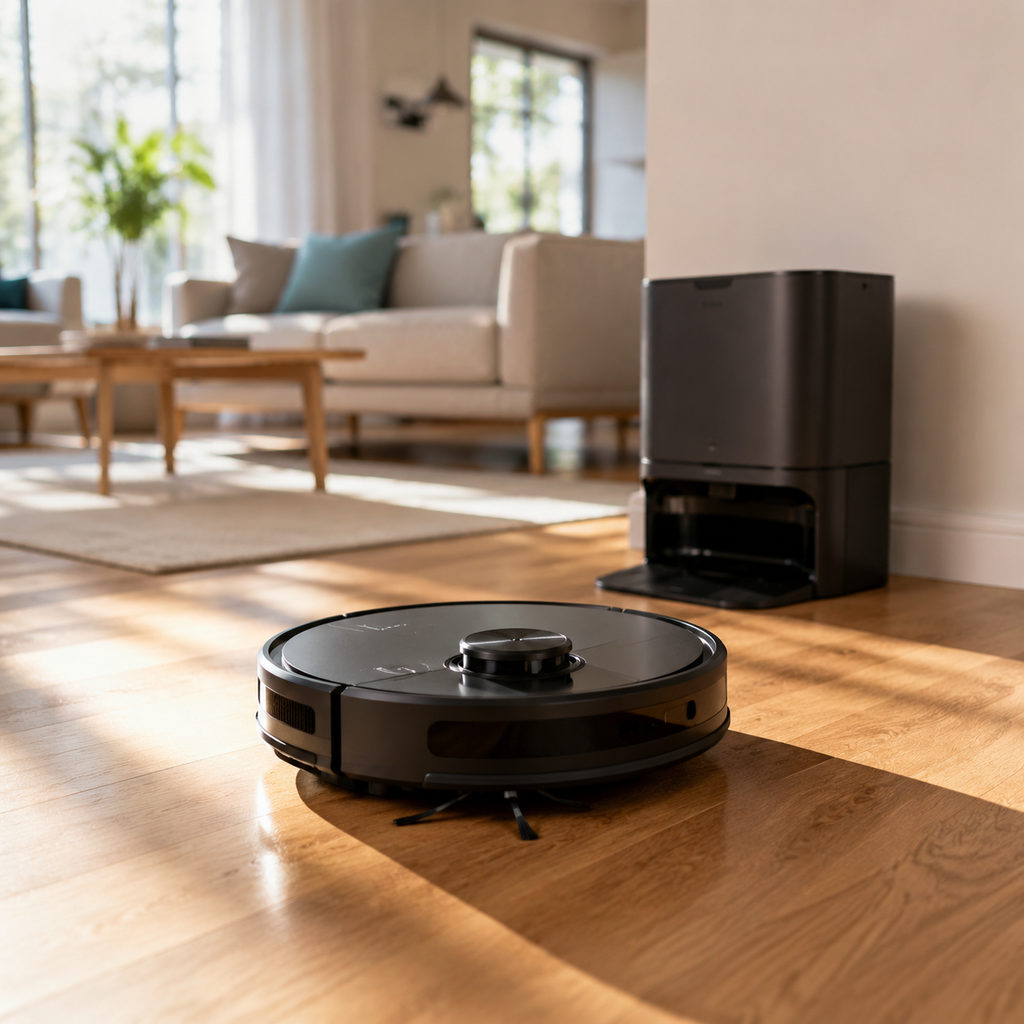
Shopping for the best budget robot vacuum means deciding what you’re willing to lose. Cut the price and lidar mapping goes first, then app scheduling, then any real ability to climb a thick rug edge. None of that stops a floor from getting clean. What does stop it: suction too weak to lift crumbs off tile, a brush that knots on the first long hair it meets, and a battery that quits halfway across the living room. Those are the three we wouldn’t give up at any price point, and holding that line is what left five models standing out of a much longer pile.
Order below tracks Amazon owner ratings, highest first. The wrydao would lead on merit anyway: it’s the only pick here with lidar and a self-emptying dock, and it’s also the priciest of this group by a wide margin. Below it the field levels off in a hurry. Lefant’s M210 claims 120 minutes per charge. Tikom’s G8000 Max claims 150. Both find their way around by bumping instead of mapping, which barely registers in a one-bedroom apartment and shows up as missed strips of floor in a sprawling house.

Pros
- Self-emptying base removes the most annoying part of robot vacuum ownership
- 6000Pa with automatic carpet detection handles pet hair on rugs and hard floors alike
- Real LiDAR mapping with editable No-Go Zones, not just bump-and-turn navigation
- Adjustable water flow protects sealed hardwood from over-wetting
Cons
- The mop pad drags rather than scrubs, so dried-on spills still need a hand
- Replacement dust bags are a recurring cost you'll need to budget for
- wrydao is a newer brand, so long-term parts availability and support history are unproven
- Needs a 2.4GHz Wi-Fi network, and mopping is limited to sealed floors and low-pile carpet
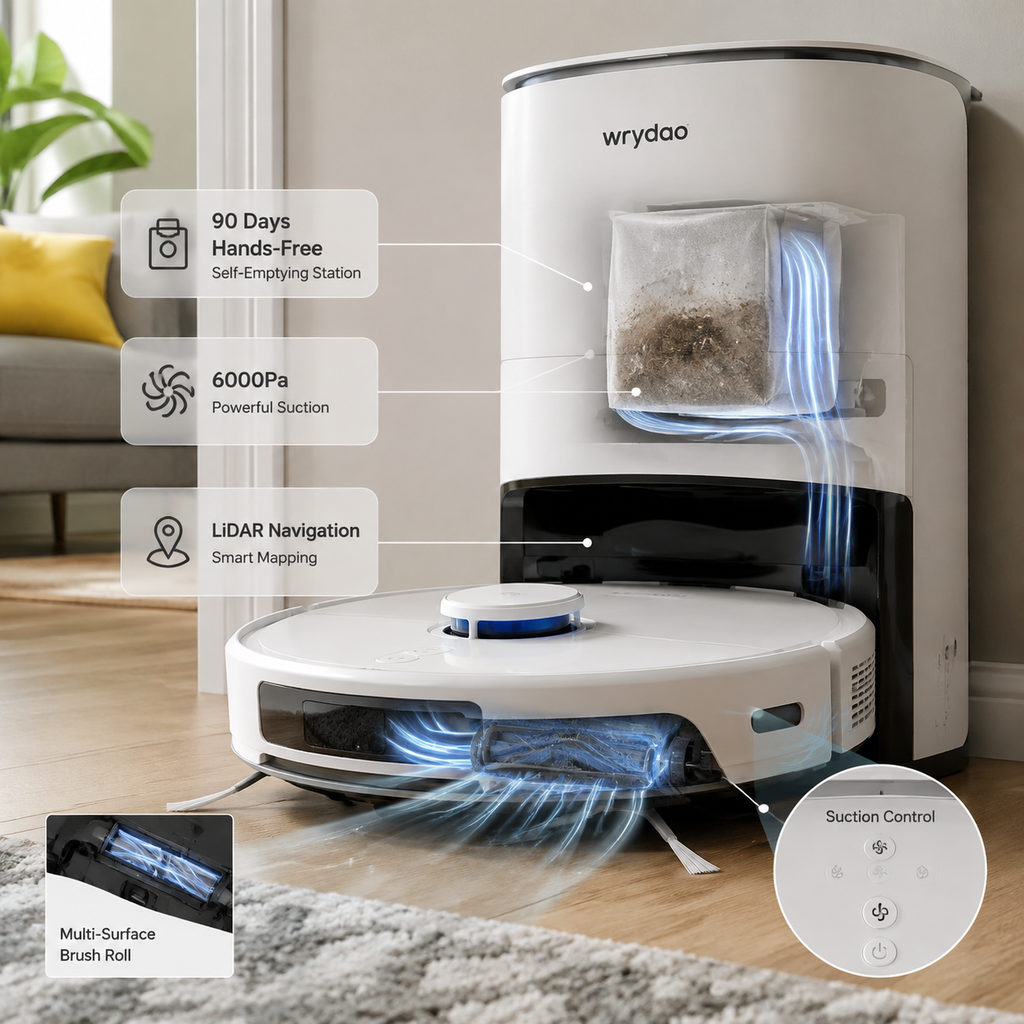
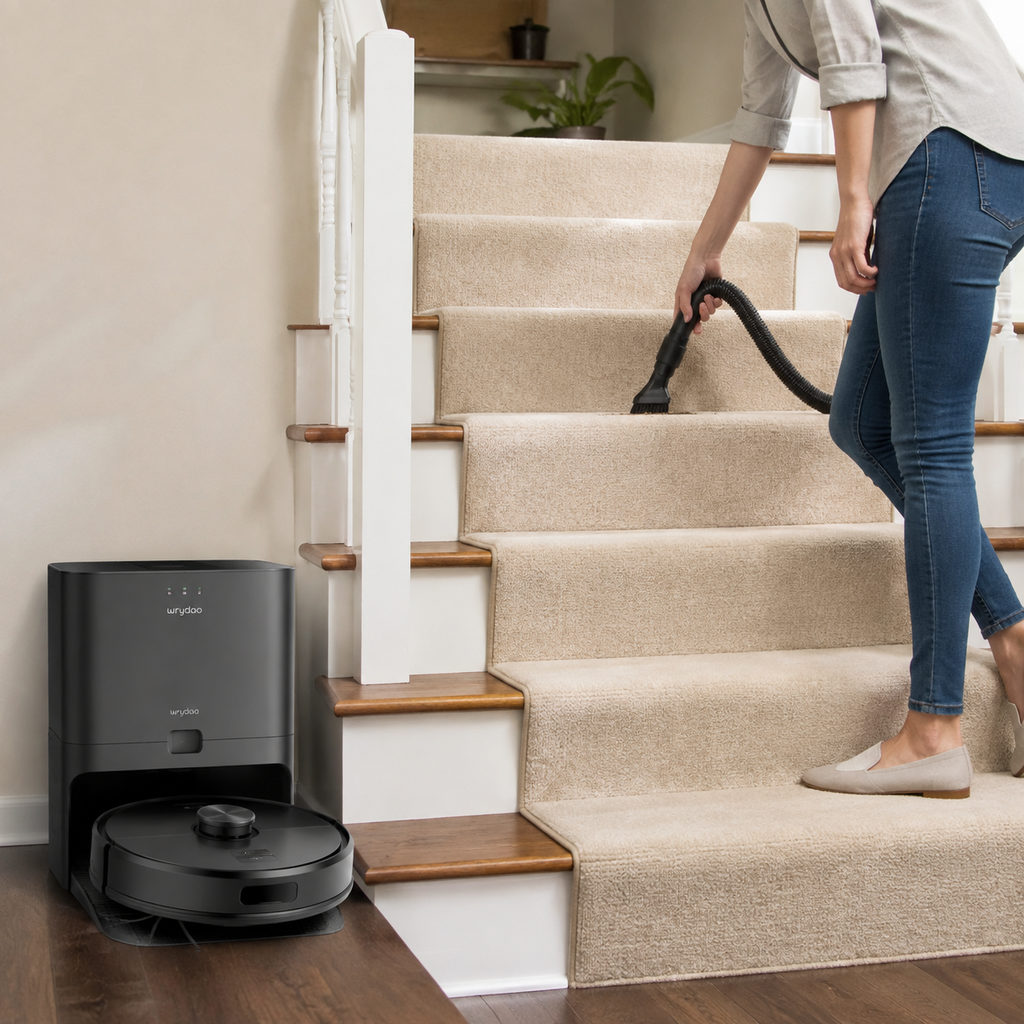
LiDAR navigation puts this one in a different class than the rest of the budget field. It maps and cleans in lanes instead of pinballing. 6000Pa handles low-pile carpet, and the station holds roughly 90 days of debris.
The dock claims real floor space and needs replacement bags, so there's an ongoing expense. Mopping is a light damp wipe, nothing more. Worth it for the navigation and the hands-off dock.
Pros
- Brushless design is genuinely better for pet hair than roller-brush robots, no more scissors required
- Slim 2.99-inch profile reaches the dust pockets under furniture that most robots miss
- 120-minute runtime plus automatic self-charging handles bigger floor plans without babysitting
- App scheduling, suction adjustment, and voice control through Alexa or Google Assistant
- Quiet enough for daytime or evening runs
Cons
- Built for hard floors. Zigzag mode isn't safe on carpet, and deep pile is not this robot's strength
- The 120-minute figure only applies in low suction mode, so expect noticeably less on stronger settings
- You have to use the newer Lefant app, not the older Lefant Life version, which trips up plenty of buyers during setup
- No mopping function or mapping-grade navigation, so it can't build a room map or set virtual walls
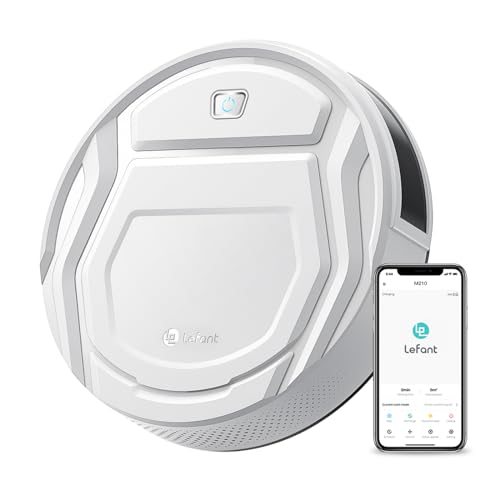
Slim enough to clear low furniture, and 120 minutes per charge finishes most apartments in one go. Suction runs strong for the class and the listing aims it at pet hair on hard floors. It stays quiet, too.
No mapping means the path is a random walk, and there's no carpet boost, so rugs get a light pass. The dustbin is small. For bare floors in a compact place, it's hard to argue with.
- Model: Lefant M210
- Diameter: 11 inches
- Height: 2.99 inches
- Runtime: Up to 120 minutes (low suction mode)
- Battery: Lithium iron phosphate
- Suction system: Brushless suction port, digital motor
- Cleaning modes: Zigzag, random, spot, edge, scheduled, manual
- Navigation: FreeMove Technology 3.0 with 6D infrared anti-collision sensors
- Connectivity: Wi-Fi, Lefant app, Alexa, Google Assistant
- Charging: Automatic self-charging
- Best for: Hard floors, pet hair, daily cleaning
Pros
- Hair pickup without brush roll tangles, a real time saver in pet homes
- 2.99-inch height reaches under low furniture
- 120-minute runtime with automatic return to dock
- One-button start or remote, nothing to configure
- 12-month warranty backed by a U.S. customer service team
Cons
- No app, Wi-Fi, or smart home voice control, so scheduling happens on the unit or remote
- Random navigation instead of mapping means repeated passes and missed spots in larger layouts
- Suction and small bin size limit it to low pile carpet, not thick or plush rugs
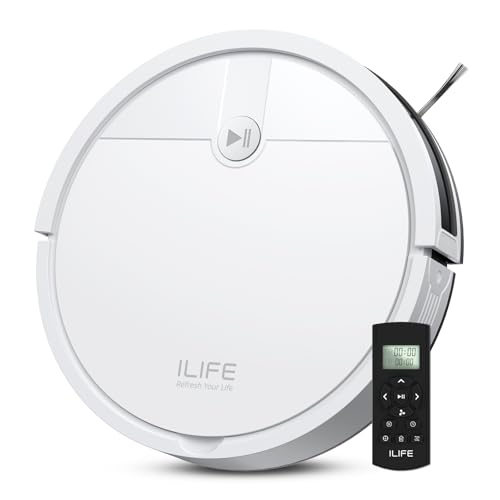
The V2 sells one idea: tangle-free suction, with no roller for long hair to wrap around. No published Pa rating, no runtime claim, no app. Press the button and it goes.
That simplicity is both the appeal and the limit. Carpet pickup is modest without agitation, and you can't schedule it from a phone. A sensible choice for bare floors in a small place, run every day.

Pros
- Strong 5000Pa suction for this price bracket
- Simultaneous vacuum and mop saves a full cleaning cycle
- 150-minute quiet-mode runtime with automatic self-charging
- Ultra-slim 2.99-inch height reaches genuinely low clearances
- Voice and remote control make it accessible for seniors or anyone who skips apps
Cons
- Relies on anti-collision and anti-fall sensors rather than lidar or camera mapping, so coverage is semi-random
- No self-emptying base, and the 450ml bin fills fast in homes with shedding pets
- The 300ml tank limits mopping range in larger open floor plans
150 minutes at maximum is the longest battery claim in this group, which makes it the budget pick most likely to finish a larger single floor without a recharge break. 5000Pa covers hard floor and low-pile carpet, and it takes app or remote input.
Navigation is bump-and-turn with no map, so a complex layout gets uneven coverage. No auto-empty either. The mop pad is for dust film, not spills.

Pros
- Strong 5200Pa suction for the price bracket
- Adjustable water flow across four levels handles different floor types
- Anti-tangle brush system is genuinely useful in a pet household
- Hands-off operation with scheduling, obstacle detection, and auto-recharge
- Works with both Alexa and Google Assistant
Cons
- No LiDAR or camera mapping mentioned, so navigation likely relies on simpler sensors and coverage may be less methodical
- Rated for low pile carpet only, so thick rugs and shag are out
- Onboard dust bin needs manual emptying since there's no self-empty base
- Brand has little track record and almost no buyer feedback to draw on
5200Pa is the strongest suction figure at the low end of this group, and on hardwood or tile that shows up as fewer crumbs skated over. The wet pad handles daily dust film alongside dry pickup, useful in a kitchen.
Detail is thin in the listing and the owner rating is the lowest here. There's no published runtime and no dock, and the bin is small, so emptying and refilling fall to you.
How We Chose on a Budget
Suction in Pa, stated runtime in minutes, brush design. Those got weighed hardest, since they’re the specs that decide whether a room ends up clean or merely disturbed. Everything else on an entry-level sheet is negotiable, and most of it is marketing. Owner feedback filled the gaps a spec sheet leaves: how often a side brush jams on cord clutter, and whether the dustbin latch survives a year of daily runs.
Anything that owners reported stalling on a standard rug edge came off the list, as did anything whose headline feature was a damp pad dragging behind it. A cloth towed by a bumping robot isn’t mopping, it’s smearing. Two models here do include a pad, and we’ll say plainly where that helps and where it doesn’t. Anyone who’d rather pay up for proper mapping and better obstacle handling should start with the best robot vacuum picks overall instead. This list stays deliberately entry-level.
Budget Picks, Closer Look
wrydao Self-Emptying Combo — Best Overall
The wrydao is the odd one out here, and it earns the top slot by behaving like a machine from the tier above. LiDAR navigation means it maps the room and cleans in lanes rather than pinballing. 6000Pa of suction pulls grit out of low-pile carpet without a fight, and the self-emptying station swallows roughly 90 days of debris before you have to think about it. App and Alexa control are both included, so scheduling is a phone tap. Owner feedback runs unusually warm on dock reliability, which is exactly where cheap self-emptying designs normally fall apart. The catch is cost and footprint. It’s the priciest of this group by some distance, and the base station claims a real chunk of wall. Those docks also run on replacement dust bags, so there’s an ongoing expense none of the others carry. The mop function is the same light damp wipe every combo at this level offers. Buy it for the navigation and the dock, not the mopping.
Lefant M210 — Best for Low Clearance
Low couches and mostly-hard floors are where Lefant’s M210 earns its keep. The body is genuinely slim, low enough to slide under a sofa skirt that stops taller robots dead, and 120 minutes of runtime is enough to finish a small apartment in a single pass with charge to spare. Suction is strong for the class, and the listing points it at pet hair on hard floors, which lines up with what owners report. It’s quiet, too. That sounds minor until you run one while you’re on a call. Where it gives ground is navigation and carpet. There’s no mapping, so coverage is a random walk that gets everywhere eventually rather than efficiently, and there’s no carpet boost, so medium and high-pile rugs get a light skim instead of a proper pull. The dustbin is small, the usual tax on a slim chassis. Hard floors, low clearance, quiet operation. That’s the brief it fills, and it fills it well.
ILIFE V2 — Simplest Entry-Level Pick
Nothing about the ILIFE V2 is sophisticated, and that’s the pitch. The listing leads with tangle-free suction and says almost nothing after that. No published Pa rating, no runtime claim, no app control. For a certain buyer that’s exactly right. Brushless pickup is a genuine advantage rather than a marketing line: there’s no roller for long hair to wrap around, so the Sunday ritual of flipping the robot over with a pair of scissors disappears. The lower owner rating tells the rest of the story. Without a stated runtime you’re guessing how much floor it clears per charge, and scheduling has to happen at the button on top. Carpet pickup is modest, too, because suction alone can’t dig embedded grit out of pile the way a beater brush can. Bare floors, small footprint, daily runs. Ask it to cover a whole house and it looks thin. Ask it to keep a studio presentable and it does the job.
Tikom G8000 Max — Longest Runtime
Runtime is the reason the Tikom G8000 Max made the list. 150 minutes at maximum is the longest claim in the group, and even after discounting that number the way you should discount every battery claim, it’s the pick most likely to finish a larger single-floor layout without a mid-job recharge. 5000Pa of suction handles hard floor and low-pile carpet, and owners point to pet hair pickup as the reason they kept it. Both app and remote control are supported, which turns out to be oddly useful when you just want it to go do one corner right now. Self-charging works as expected. The mop pad is present, and it is what it is: a damp cloth for dust film, not for dried spills. Navigation is the weak link again, with no map behind it, so on a complex floor plan it’ll re-cover ground it already did and skip a patch behind a chair. There’s no auto-empty either, so the bin becomes a daily chore in a shedding household. Long runs, simple layouts.
ROPVACNIC Vac and Mop — Most Suction at the Bottom of the Range
ROPVACNIC brings the strongest suction figure at the bottom of this range, 5200Pa, and on hardwood or tile that difference shows up as fewer crumbs skated over instead of picked up. It works as a two-jobs-at-once machine, dry pickup with a wet pad trailing, and in a kitchen that collects flour and dog hair in equal measure that combination earns its place. The listing is thin on detail, though, and the owner rating is the lowest in the group, which are related facts more often than not. No runtime is published, so battery life stays an unknown until the thing is in your hallway. Navigation is pattern-and-bump with nothing resembling a map. The bin is small and there’s no dock to empty into, so daily housekeeping falls to you. The water reservoir also wants refilling more often than you’d like on a big floor. This is the pick for someone chasing maximum suction for minimum outlay who’ll happily do the maintenance themselves.
| Model | Navigation | Key Spec | Best For | Price Tier |
|---|---|---|---|---|
| wrydao Self-Emptying Combo | LiDAR mapping | 6000Pa, 90-day dock | Set-and-forget cleaning | Mid-range |
| Lefant M210 | Random bounce | 120 min runtime, slim body | Low clearance, hard floors | Budget |
| ILIFE V2 | Random bounce | Tangle-free suction | Simplest setup | Budget |
| Tikom G8000 Max | Random bounce | 150 min max, 5000Pa | Larger single floors | Budget |
| ROPVACNIC Vac and Mop | Pattern and bump | 5200Pa suction | Bare-bones vac & mop | Budget |
Spending Less Without Regret
The best budget robot vacuum keeps its suction, whatever else it drops. Around 2,000Pa is the floor for bare surfaces, and you want more than that if any part of the house is carpeted. The picks here run from 5000Pa to 6000Pa where a figure is published at all, which is plenty for daily crumb and hair duty. Models that publish no suction number are asking you to trust them. Sometimes that works out.
Random-bounce navigation is the trade you actually make. Lidar builds a map and cleans in lanes. Everything cheaper wanders semi-randomly until the battery runs down, and statistically it does reach most of the floor. The real difference is time and predictability rather than cleanliness. In a studio or a one-bedroom, a bumping robot run daily ends up level with a mapper run twice a week. In a big house it doesn’t.
A tangle-prone brush will eat whatever time the robot saves you. Long hair is what kills cheap robots, not dust. Brushless suction designs and tangle-free rollers sidestep the weekly ritual of flipping the thing over with a pair of scissors. If anyone in the house has hair past their shoulders, treat this as the first spec you check instead of the last.
Runtime has to outlast the room, and mop pads eat into it. Battery claims of 120 or 150 minutes get measured in the weakest, quietest mode, so plan on meaningfully less in normal use. Towing a wet pad shortens it further and adds drag the motor has to fight. Readers who’d rather put the whole budget into pickup than a token wet wipe should compare robot vacuums without a mop before deciding.
Frequently Asked Questions
Is a budget robot vacuum actually worth buying?
For daily maintenance on hard floors, yes. A cheap robot that runs every day beats an expensive one you forget to schedule. It won’t deep clean carpet or reach the corners the way an upright does, but it keeps the baseline dust and hair load down, and that load is most of what makes a floor look bad.
What do you really lose without lidar mapping?
Efficiency and repeatability, mainly. A non-mapping robot takes longer to cover the same area and can’t handle room-by-room zones or no-go lines. It still cleans. On floor plans bigger than a small apartment, expect the occasional missed patch and a noticeably longer run.
Will a cheap robot vacuum work on carpet?
Low-pile, yes. Medium and high-pile, not really. Entry-level models rarely include a carpet boost mode, so suction stays flat when they roll from tile onto a rug and embedded grit stays put. Deep pile also risks stalling the wheels. Keep them on hard floors and thin rugs.
How long should a budget robot vacuum last?
Two to three years of daily runs is realistic, with the battery and side brush wearing out first. Both are cheap consumables you can swap yourself in a few minutes. What ends these robots early is a wheel motor or a broken dustbin latch, neither of which is user serviceable on most models.
Related Guides
- best vacuum for pet hair
- best vacuum for car detailing
- best robot vacuum and mop
- More vacuum & floor care guides
What We’d Pick
We’d stretch for the wrydao Self-Emptying Combo and then stop thinking about floors for three months. Lidar mapping and a 90-day dock are the two features that change how a robot fits into your week, and it’s the only pick here with either. It’s also the priciest of this group, so if that’s out of reach, the Lefant M210 is what we’d hand a friend with hard floors and a low couch. 120 minutes and a slim chassis cover a lot of apartment. Anyone with more square footage on one level should look at the Tikom G8000 Max for the longer run instead, and shoppers who only care about raw pickup can take the ROPVACNIC Vac and Mop. None of these will map your house or dodge a stray sock. All of them will keep a floor from looking neglected, which at this end of the market is the entire job.

Leave a Reply