
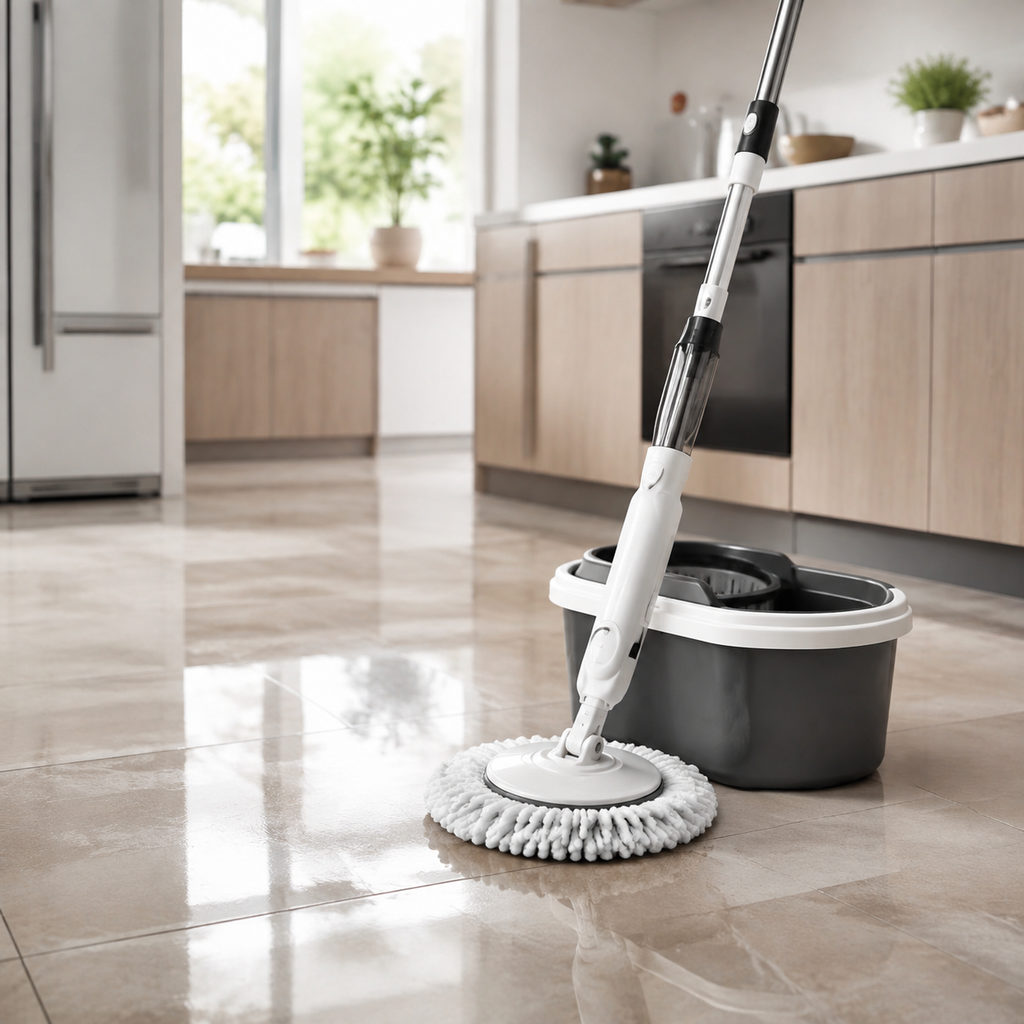
Half the results for this phrase are bottles of floor solution. A hard floor cleaner machine is the appliance, and it does one job that neither a shop vac nor a bucket manages. The best hard floor cleaner sprays a thin film of solution, scrubs it with a spinning roller, then vacuums the dirty water back up in the same pass, so the floor behind you is damp rather than wet. No wringing. Nothing smeared into grout lines to dry there later. Every pick below wants sealed hard floors: sealed tile, sealed vinyl, laminate, finished hardwood. Unsealed wood, unglazed stone and carpet are wrong for all five, and water on a bare board raises the grain and stains it for good.
Two things separate a good one from a frustrating one, and neither shows up in a spec sheet. First, how much water gets left on the floor. A good unit leaves a hallway walkable in about two minutes; a weak one leaves a film that dries to streaks, so you go over the room again. Second, what happens to the roller once you’re done. A damp roller parked in a tray of grey water will smell inside a week, and the machine then spreads that smell around your kitchen. Models with a self-cleaning cycle rinse the roller while it spins in the dock, which helps a lot and still doesn’t excuse pulling it out to air-dry.

ILIFE D90 Cordless Wet Dry Vacuum Mop with Self-Cleaning, Anti-Tangle Brush & Dual Tank for Hard Floors
Pros
- Powerful 2100 RPM motor handles tough messes efficiently
- Anti-tangle brush design saves time on maintenance
- Self-cleaning function reduces hands-on upkeep
- Lightweight cordless design for easy maneuverability
- Smart alerts keep you informed of battery and maintenance needs
Cons
- New product with no customer reviews yet to verify performance claims
- May not be suitable for high-pile carpets or unsealed floors
- Battery life details aren't specified in the product information
The D90 is cordless and narrow, and it finishes drier than anything else in this group. Owners keep mentioning a floor that's walkable in a couple of minutes rather than tacky for a quarter of an hour.
ILIFE lists no tank volume and no runtime, so plan on one floor per charge. There's no automatic roller rinse either, which means the roller comes out under the tap after every session.

Bissell CrossWave Turbo 3888A Wet Dry Vacuum Mop Combo, All-in-One Hard Floor & Area Rug Cleaner with Two-Tank Technology
Pros
- One-pass wet and dry cleaning cuts hard floor routines down noticeably
- Separate clean and dirty tanks mean you aren't spreading grime around
- Genuinely multi-surface: sealed hard floors plus area rugs
- Odor-resistant filter treatment keeps the machine fresher between uses
Cons
- Not a substitute for a dedicated deep carpet cleaner on plush or high-pile carpet
- Dirty water tank and brush roll need rinsing after each use, or odors creep back
- Unsealed hardwood and other porous floors are off the approved surface list
The 3888A washes sealed hard floors and low-pile area rugs from one head, which nothing else here claims. That's the reason to pay Bissell's premium over the rest of this group.
Deep or shaggy pile stays off limits, since the roller can't draw enough water back out. Upkeep is the fussiest too: brush roll and dirty tank rinsed every use, plus a tray to empty.

dreame G10 Pro Wet Dry Vacuum Mop - Vacuum & Mop Combo for Hard Floors with Self-Cleaning & 35min Runtime
Pros
- Handles both wet and dry messes without switching tools
- Self-cleaning feature eliminates the grossest part of mopping
- Dual tank design ensures you're always cleaning with fresh water
- 35-minute runtime sufficient for most homes
- Compatible with various hard floor surfaces
Cons
- Not suitable for carpets or rugs
- No customer reviews yet to confirm real-world performance
- Handle must be installed in specific orientation for proper operation
The G10 Pro lifts loose crumbs while it washes, so cereal on a kitchen floor doesn't need sweeping first. Little water left behind, and a dirty tank that's generous for the size of the head.
Edges are the weak point in owner reports, with a dirty strip along baseboards and cabinet kick plates. No self-cleaning cycle is listed, so you rinse the roller yourself.
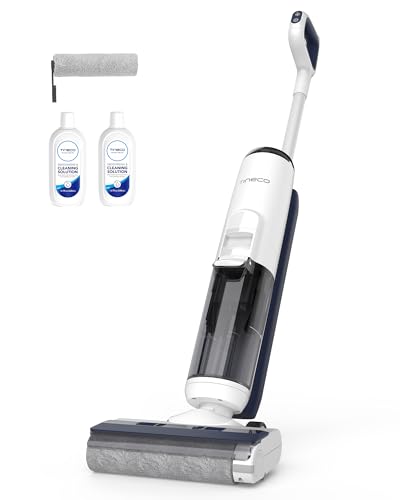
Pros
- Genuine one-step cleaning on hardwood, tile, marble, and laminate
- Floors dry streak-free within seconds after passing over them
- Self-cleaning system means almost no hand contact with dirty parts
- 0.20-inch edge reach handles baseboards and corners well
- Larger tank than earlier iFLOOR models reduces refill stops
Cons
- Sealed hard floors only, so carpet and unsealed wood are off the table
- Filter needs cleaning about once a month to keep suction stable
- Rating comes from very limited feedback so far, so long-term durability isn't clear
Tineco names edge cleaning and an automatic self-cleaning cycle, and that cycle is the reason to pick this one. The roller gets rinsed under clean water instead of sitting damp in whatever it collected.
Those rinses draw from your clean tank, so refills arrive sooner, and the dock needs emptying afterward. Check which bundle you're ordering, because several share the iFLOOR 5 name.

Pros
- One-pass wet and dry cleaning replaces the vacuum plus mop bucket routine
- Self-cleaning base plus an included spare roller means less hands-on maintenance
- Dual removable tanks are easy to empty and rinse
- Lightweight body with swivel steering makes tight spaces manageable
Cons
- Corded design, so you're limited by outlet placement and cord length
- Sealed hard floors only. Carpet and rugs are out of scope
- 15KPA suction is fine for daily crumbs and dust but it isn't a deep-cleaning powerhouse
Cheap and corded, with nothing clever about it. Mains power means suction that doesn't fade partway through a room, and there's no battery pack to lose capacity in a few years.
The cord is the daily cost, since you'll change outlets in a long room and it drags over the wet strip behind you. No self-cleaning cycle, and spare rollers for a small brand aren't always easy to source later.
How We Picked These Floor Cleaners
We worked from what each listing actually states, then weighed that against owner feedback, because the figures in this category are marketing figures. Suction numbers get measured at the nozzle with no water moving through the path, and runtime numbers come from the lowest setting on bare tile. Three of these five quote no tank volume or wattage at all, so we say so instead of guessing. Where a brand names a feature like edge cleaning or an automatic roller rinse, we treated it as a claim to check against owner reports.
Fit for purpose mattered more than raw power. These are washers, not extractors. If your usual problem is a knocked-over pitcher or water pooling under a sink, a cordless wet dry vacuum with a drum and a hose is the right buy, and it will clear that faster than any machine here. We also gave weight to how the dirty water tank comes apart, since a tank you can’t get a hand inside is a tank that stays grimy. Anything with a sealed tray, or a roller needing a tool to remove, got marked down.
Best Hard Floor Cleaner: The Picks
ILIFE D90 — Best Overall for Sealed Floors
ILIFE’s D90 is the one we’d hand to someone with a mostly tile or vinyl main floor and no patience for a two-part routine. Cordless, so nothing tugs behind you at the kitchen island, and the head is narrow enough to slide between a fridge and a counter run without a shove. It holds the strongest average of these five at 4.4, and owner feedback keeps landing on the thing that matters: a floor dry enough to walk on within two minutes rather than tacky for a quarter of an hour. ILIFE quotes no tank capacity or runtime, so treat a full charge as one floor, not a whole house. Maintenance is the gap. No automatic roller rinse is mentioned here, which means you pull the roller yourself, rinse it under the tap, and stand it somewhere with air after every session. Skip that twice and you’ll smell it. Keep up with it and this is the cleanest-finishing pick in the group.
Bissell Crosswave Turbo 3888A — Best for Hard Floors With Rugs
Bissell’s Crosswave Turbo, model 3888A, earns its place if your hard floors get interrupted by rugs. It’s built to wash sealed hard flooring and low-pile area rugs from the same head, which none of the other four claim, so the runner in the hall stops needing a second machine. Multi-surface is genuinely useful. It’s also the priciest of this group, and its 4.2 average sits under the ILIFE. Two honest limits. Low-pile really does mean low-pile, because a shag rug or wall-to-wall carpet soaks up more water than the roller can pull back out, leaving pile that’s wet for hours. Upkeep is the fussiest here too: brush roll and dirty water tank both want a rinse after every use, and the brush wants a rack to dry on rather than a wet night inside the body. Bissell supplies a tray for the cleaning cycle. Empty it each time, since standing rinse water is where the smell begins.
dreame G10 Pro — Best Two-in-One for Crumbs and Spills
What the G10 Pro sells is doing both halves of the job in one pass, lifting loose crumbs while it washes, so cereal across a kitchen floor doesn’t need sweeping first. That’s the real break from a mop and bucket, where dry debris turns to paste the second it gets wet. Owner feedback runs positive on how little water this one leaves behind and on a dirty tank that’s generous for the size of the head. Edges are where it slips. Reports keep flagging a dirty strip left along baseboards and cabinet kick plates, so you finish corners by hand, and that shows up in a 4.1 average alongside a few complaints about the water sensor nagging early. dreame names no self-cleaning cycle on the listing, so the roller rinse is your job again. Mid-range money for a machine that does the two-in-one part better than it does trim work.
Tineco iFLOOR 5 Breeze — Best for Low Roller Upkeep
Only Tineco’s iFLOOR 5 Breeze Complete names both edge cleaning and an automatic self-cleaning cycle on its listing, and those two features are why it holds a spot despite the joint-lowest average here at 4.0. That cycle matters more than the marketing makes it sound. Park it in the dock and start the run: the roller spins under clean water instead of sitting damp in whatever it just collected, which is the best defense there is against a machine that reeks by next Friday. The body is cordless and light, so a stair landing or a small bathroom floor is a reasonable job. Water is the cost of that convenience. Every rinse draws from your clean tank, so refills come sooner than the tank size suggests, and the dock still needs emptying afterward. Naming is the other irritation, since several bundles carry the iFLOOR 5 badge. Check which roller and how many filters are in the box.
HAUSMEISTER Hydroflex Max — Best Budget Corded Pick
HAUSMEISTER’s Hydroflex Max is the budget entry, and it’s corded, which is a fair trade once you think it through. Mains power means suction that doesn’t sag two rooms in, and no battery pack sitting at eighty percent capacity by year three. Cheapest here by a wide margin. What you pay instead is cord management: you’ll unplug and hunt a second outlet in any long open-plan room, and the cable has a habit of tracking straight over the wet strip you just finished. No self-cleaning cycle on this one either, so the roller comes out under the tap every single time. Parts are the usual question mark with an unfamiliar brand, since a replacement roller for a small name isn’t always still on the shelf a year later. Wet pickup itself is fine on sealed tile and vinyl, which is all most people ask. Spend the least. Accept the cable and the manual rinsing.
| Model | Power | Self-Clean Cycle | Best For | Price Tier |
|---|---|---|---|---|
| ILIFE D90 | Cordless | Not listed | Driest finish on sealed tile and vinyl | Mid-range |
| Bissell Crosswave Turbo 3888A | Not listed | Tray cleaning cycle | Hard floors plus low-pile rugs | Premium |
| dreame G10 Pro | Not listed | Not listed | Crumbs and wet spills in one pass | Mid-range |
| Tineco iFLOOR 5 Breeze | Cordless | Auto self-cleaning | Edges and the least roller upkeep | Mid-range |
| HAUSMEISTER Hydroflex Max | Corded | Not listed | Spending the least on sealed floors | Budget |
Wet Pickup, Roller Care and Water Use
Sealed floors only, and that isn’t a formality. Sealed tile, sealed vinyl, laminate with tight seams and finished hardwood all cope fine: the water sits on a coating for a few seconds, then leaves with the roller. Unsealed wood, unglazed stone and bare concrete drink it instead. Raw boards raise their grain and stain dark. Seams lift too, and none of it reverses. Carpet is out as well. Unsure what your floor is? Put a few drops of water in a corner and watch whether they bead or soak away.
Judge one by what it leaves behind, not by suction claims. The entire point is a floor that’s walkable in roughly two minutes. Spray heavily but extract weakly and you get a film that dries to streaks, which forces a second dry pass. A washer that streaks has given up its only real advantage, and if that’s where you land, our roundup of the best mop for hard floors gets you the same result for less money. Scan owner reports for the words streaky and still wet.
The self-cleaning cycle is a smell prevention feature. Nothing else on the spec sheet decides whether you still like the machine in six months. An automatic cycle rinses the roller with clean water while it spins in the dock, so it dries reasonably clean instead of soaked in what it collected off your floor. Empty the tray anyway. Pull the roller out to air weekly, and expect to buy a replacement eventually.
Two tanks, two rinsing habits. Clean water in one side, dirty water back into the other, and it’s the dirty side that finishes machines off early. Hair wraps the filter screen in that tank, so rinse it under a hot tap when you finish rather than the next morning. Check the tank opening before buying. Some are molded tight enough that neither a hand nor a brush reaches the corners.
Cord or battery changes how you work, not how it cleans. A cordless hard floor cleaner goes wherever you point it, around an island or up a step, and it stops when the battery does. Two of these five say cordless on the listing, one says corded, and the other two don’t state it either way. Runtime figures come off the lowest setting on bare tile, so read them as claims rather than what you’ll get on a grubby kitchen. A corded hard floor cleaner removes the runtime limit and hands you a cable that tracks over the strip you just washed. Small floor, either one is fine. Long open-plan room, pick your annoyance: hunting a second outlet, or stopping to recharge.
Frequently Asked Questions
Can I use a hard floor cleaner on hardwood?
On sealed, finished hardwood, yes, and that’s the surface most of these are designed around. The roller carries only a light film of water and the suction takes it back in the same pass. On unsealed or waxed boards, don’t. Moisture works into the grain and shows up as dark patches that sanding is the only cure for.
How is this different from a wet dry vacuum?
A wet dry vac extracts liquid you aim it at through a hose into a drum, and it washes nothing. A floor washer applies solution, scrubs the surface, then lifts the water back, room by room. Different jobs. Plenty of households with pets keep one of each.
Is the best hard floor vacuum mop better than a mop and bucket?
On sealed floors, yes, and the single pass is why. It sprays, scrubs and pulls the dirty water back in one movement, so what came off the floor ends up in a tank instead of going back into a bucket you keep dipping into. It also lifts dry crumbs while it washes, where a wet mop head turns them to paste. A bucket still wins on unsealed boards and on price.
Do these replace vacuuming?
Partly, on hard floors. Most pick up loose crumbs while they wash, so a sweep first isn’t always necessary on tile. Anything on carpet still needs a dry vacuum, and grit or gravel will score a roller or jam the pickup path. Sweep first if there’s real dry debris down.
How often does the roller need cleaning?
After every use, no exceptions. Even with an automatic rinse, take the roller out weekly and wash it in warm water, then stand it somewhere with airflow until it’s fully dry. A roller left damp inside the machine is the most common reason these end up smelling.
Do I need a special solution in a hard floor cleaner machine?
Use the formula the brand names, or plain warm water for a light pass. Skip vinegar, oil soaps and anything that foams up: foam confuses the float in the dirty tank, and an oil film leaves a floor your socks grip. Whatever goes in, run clean water through the roller afterwards so nothing dries inside the head.
Related Guides
- best cordless vacuum for pet hair
- best rug shampooer
- best steam vacuum for carpet
- More vacuum & floor care guides
The Bottom Line
One pass on a sealed floor, and a roller you keep clean. That’s this whole category in a sentence. The ILIFE D90 takes the overall win because it finishes driest of the five and leaves a kitchen walkable while you’re still refitting the tank, and its 4.4 average is the strongest of the group. If rugs break up your hard floors, the Bissell Crosswave Turbo 3888A is the only pick that covers both, in exchange for the fussiest cleanup routine here. Anyone who would rather not think about roller upkeep should look at the Tineco iFLOOR 5 Breeze, whose automatic cycle handles most of that work and asks for more refills in return. Spending as little as possible? The HAUSMEISTER Hydroflex Max is corded and plain and does the basic job on tile. None of them belongs on unsealed wood or carpet. All of them beat pushing a wrung-out mop head around.

Leave a Reply