

Eight hours in a chair does something specific to your pelvis: it rolls backwards. The sit bones take the whole load and the lower back flattens out. By three in the afternoon you’re leaning on one hip to get away from it. That backward roll, plus pressure driving straight down through the sit bones, is what the best seat cushion for sciatica is shaped to change. Nothing on this page fixes anything. A cushion moves weight around and alters the angle your hips sit at, which is a mechanical change and the honest limit of what foam can do. We researched five of the most bought ones and left them in the order owner ratings put them.
Two design levers matter here and they’re easy to confuse. One is a cutout, which removes foam so a bony spot has nothing underneath it. The other is a wedge, a front-to-back slope of a few degrees that stops the top of your pelvis tipping away behind you. Some of these five do one, a couple do both. Beyond that it’s thickness, plus two small questions: does the base grip a mesh seat, and does the cover unzip. Measure your seat pan before you order. A cushion that overhangs the front edge or jams up against the armrest posts will leave you sitting worse than you started, whatever clever shape it has.

Pros
- Dense memory foam that won't flatten quickly and returns to shape after use
- Practical non-slip base prevents sliding during movement
- Easy-clean removable cover saves time and hassle
- Versatile design works across multiple seating environments
- Built-in handle makes it genuinely portable
Cons
- No reviews yet to confirm long-term durability claims
- U-shaped cutout may not suit everyone's body type
- Large size might overwhelm smaller chairs or compact car seats
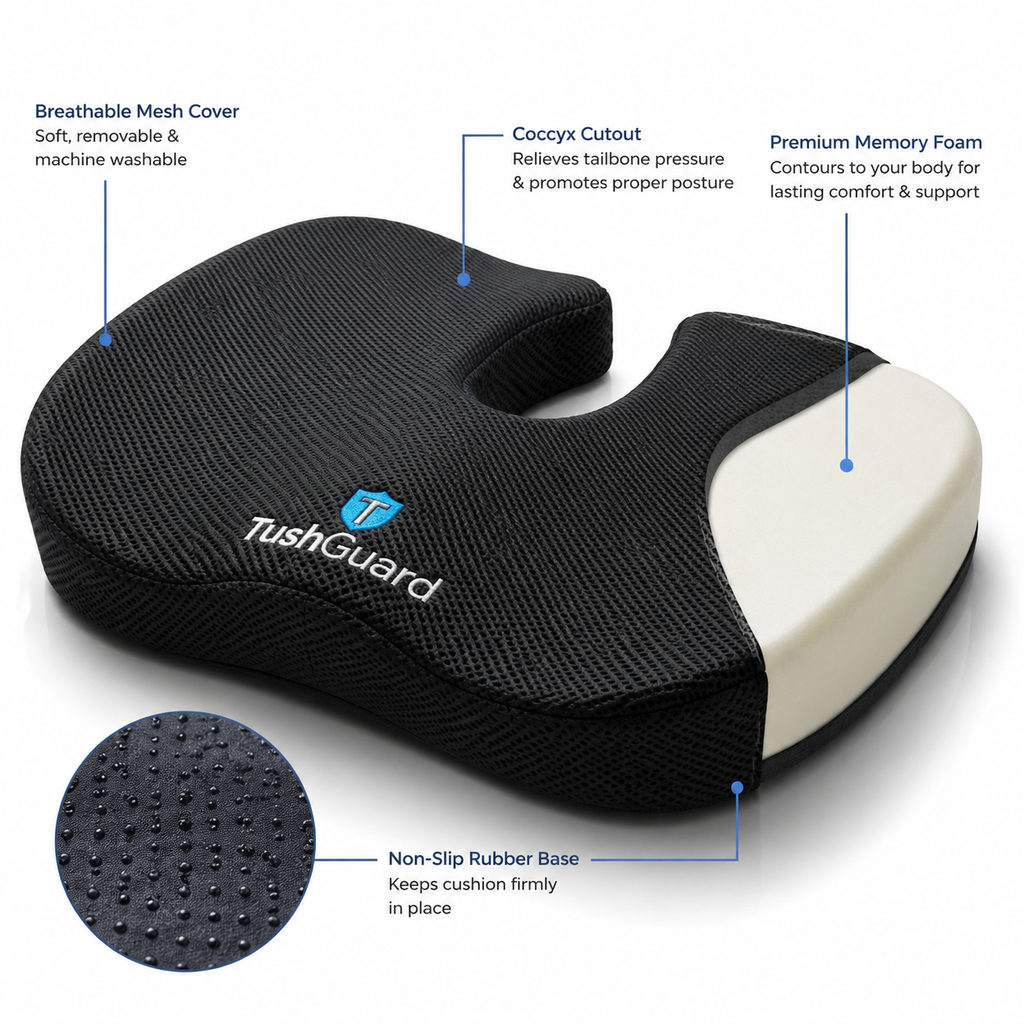
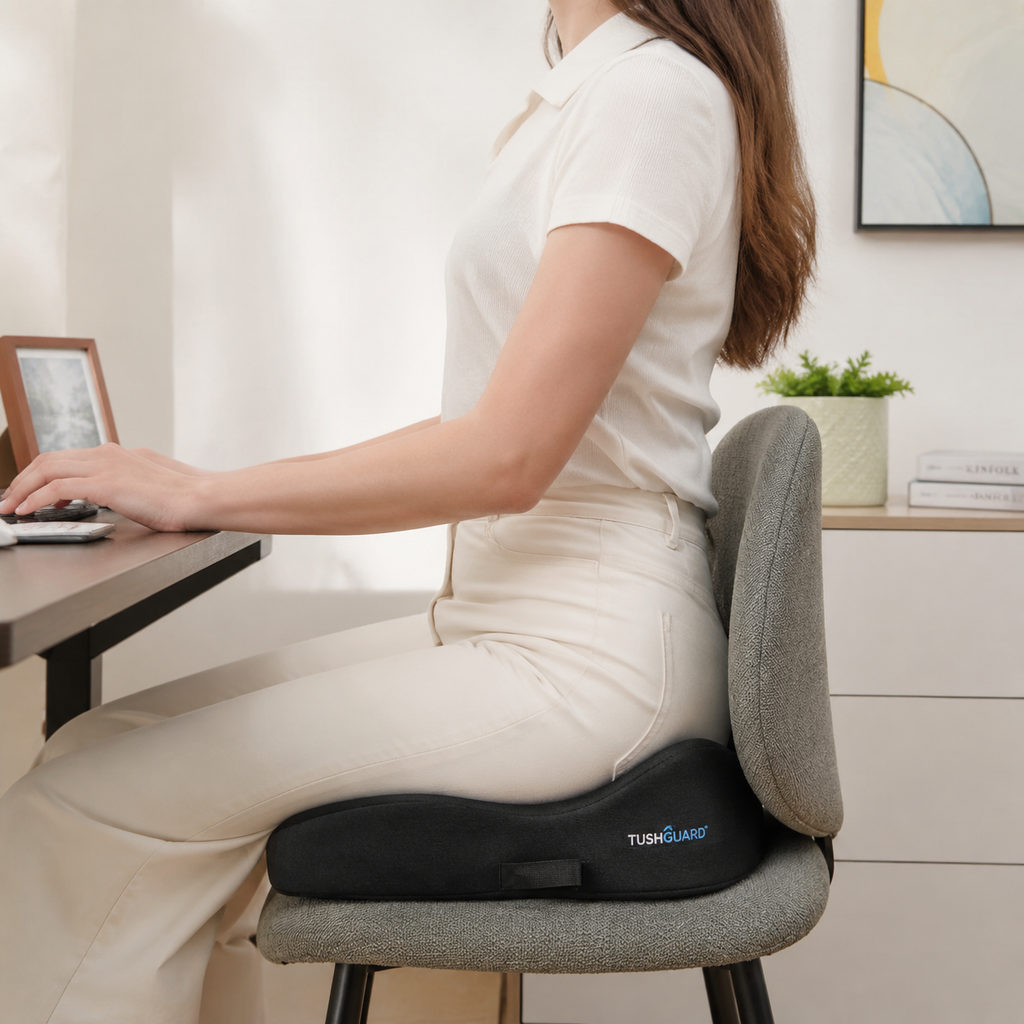
Sold in a large size, so the platform spreads weight across more area instead of loading two small points. Medium-density memory foam with a rear cutout deep enough to leave the coccyx over air.
It's a flat pad, not a wedge, so it won't do anything for a pelvis that rolls backwards. Large also fouls the armrest posts on compact task chairs. Measure the seat pan.
Type: Large memory foam seat cushion
Foam: Medium density, no gel layer
Feature: Deep rear coccyx cutout, flat top
Best use: Wide seat pans and all-day sitting

Dreamer Car Memory Foam Seat Cushion for Tailbone & Sciatica Relief, U-Shaped Coccyx Cutout, Non-Slip Base
Pros
- U-shaped coccyx relief plus a tapered front edge in one cushion, not just a flat foam pad
- Wide platform accommodates a broad range of hip sizes
- Machine-washable, Oeko-Tex certified cover
- Rubber base actually stays put on slick car and office seats
Cons
- Optimized for users under 200 lbs, so heavier sitters will likely bottom out the foam
- Slow-rebound foam runs soft, and anyone wanting firm, high-density support should look elsewhere
- A wedge-shaped cushion raises your seating height, which can be awkward in low-clearance vehicles
A wedge, so the back edge rides higher than the front and the top of your pelvis stays forward rather than rolling away behind you. A rear cutout is moulded in as well, so both levers work together.
The slope is fixed at one angle, which overcorrects a seat pan that already tips forward. It lifts your head, crowding a small car. Firm out of the box, and it wants airing.

Pros
- Coccyx cutout targets tailbone and sciatica pressure directly, not just general softness
- Washable zip-off mesh cover keeps it fresh through daily use
- 18 x 14.2 inch footprint fits most office chairs, car seats, and wheelchairs
- Non-slip base plus carry handle makes it genuinely portable
Cons
- At 3.15 inches thick it lifts you noticeably, so you'll likely need to lower your chair or adjust your driving position
- Memory foam firms up in cold cars and softens in summer heat, so feel varies with temperature
- It's a newer listing, so there's limited long-term owner feedback on how the foam holds up past a year
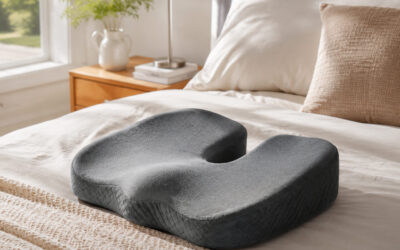
Cheapest here, and it moves between a desk chair and a car seat without complaint. Contoured memory foam with a rear U cutout and a mild forward slope, so it nudges your angle a little too.
Thinner than the TushGuard, so a dead chair pad gains little height back. The plain fabric base skates on mesh, and heavier owners see it pack down inside a year.

Nisuez L-Shaped Memory Foam Seat Cushion with Lumbar Support Pillow for Car, Truck & Office Chair
Pros
- Two-in-one design covers both seat and lumbar support in a single purchase
- High-density memory foam holds its shape better than cheap polyfill cushions
- Height boost improves road visibility for shorter drivers
- Genuinely versatile fit across vehicles, office chairs, and wheelchairs
Cons
- Verified buyer feedback is still thin, so long-term foam durability isn't proven yet
- A height-boosting cushion can throw off your seatbelt or steering wheel position in smaller cars
- Memory foam traps heat, which gets noticeable in a hot car during summer
Ships as a pair: a seat cushion plus a separate lumbar pillow that fills the gap behind your waist. Sitting rolls the pelvis back and the lower back follows, so working both ends at once makes sense.
The lumbar strap works loose over a week of getting in and out, and its moulded height lands mid-back on shorter torsos. Softer foam. Two pieces crowd a compact bucket seat.

Pros
- Dual-hole tailbone cutout genuinely offloads the coccyx rather than just adding padding
- Removable zippered cover makes cleanup simple
- Straps prevent the sliding problem that plagues most seat cushions
- Breathable mesh layer helps with heat buildup during long sits
Cons
- At 5.5 inches thick, it raises your seat height noticeably and may not clear a low desk
- Memory foam can feel firmer than expected until body heat softens it
- Very little verified buyer feedback available yet, so long-term durability is unproven
An opening under each sit bone rather than one notch at the back, which is the most direct way foam can take load off the exact points you meet the chair with. Firm and sculpted.
The ridges between the cutouts stay noticeable for a week and some owners never settle with them. Priciest of the five and lowest rated here. Travels badly.
Type: Ischial tuberosity support cushion
Foam: Firm sculpted memory foam
Feature: Twin sit bone cutouts
Best use: Pressure concentrated right under the sit bones
How We Picked These Cushions
None of these came through our door. We compared published dimensions and thickness, foam density, cutout geometry, wedge angle where a cushion has one, base material, and whether the cover comes off, then read owner feedback hunting for what goes wrong around month three. Four failure patterns cost cushions ground: foam that bottoms out under a heavier sitter, a base that skates forward on mesh, a chemical smell still hanging around after a week, and a slope steep enough to slide you toward the front lip. Owner ratings broke the remaining ties and we left that order alone rather than promoting a favorite.
Worth being clear about what this page isn’t. Direct pressure on the coccyx is a different problem with a different answer, and our guide to the best cushion for tailbone pain goes much deeper on rear cutout depth, because that’s the whole lever there: cut the foam away and the tailbone floats over a gap. Sciatic discomfort runs from the hip down the back of the leg, and what long sitting adds to it is load through the sit bones and a pelvis rolled backwards. So the shapes worth paying for on this page are the ones that unload the sit bones or hold the pelvis upright. Different geometry, same tape measure.
Best Seat Cushion for Sciatica: Pick by Pick
TushGuard Large Black — Best Overall
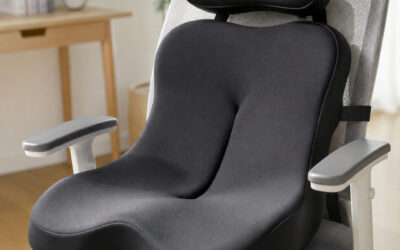
Highest owner rating of the five, and the reason is dull: it’s big. TushGuard sells this one in a large size, so the platform spreads your weight over more area instead of concentrating it under two small points. Wide thighs, broad seat pans, and a chair whose padding gave up years ago all suit it. Medium-density memory foam, with a rear cutout deep enough that your coccyx has air under it rather than foam. Owners on eight-hour shifts report the loft is still there a year on. Thin pads don’t manage that. The catch is the shape. This is a flat platform, not a wedge, so it does nothing about a pelvis that rolls backwards, and if that’s your complaint the Dreamer Car below is the better geometry. Large also means large. On a compact task chair it fouls the armrest posts and cants your hips. Measure the flat part of your seat first.
Dreamer Car Wedge Cushion — Best Forward Wedge
Dreamer Car builds this as a wedge and the wedge is the entire point. Its back edge rides higher than the front, so the top of your pelvis is held forward of where it would otherwise settle and your lower back keeps some of its curve without you thinking about it. A rear cutout is moulded in too, so both levers work at once. Amazon’s listing puts sciatica straight in the product name. Read that as brand copy: what the cushion does is change the angle you sit at, and long-distance drivers are the owners who notice it most. Two problems. A wedge lifts your head, real trouble in a small car where you already brush the headliner, and the slope is fixed at a single angle, so a seat pan that already tips forward ends up overcorrected. The cover unzips, which counts for more than it sounds. The foam arrives firm and wants a few days in open air.
CushZone Chair and Car Pad — Best Budget Pick
Cheapest of the group by a clear margin, and it doesn’t feel like much of a compromise until you sit on it for a full day. CushZone’s pad moves between a desk chair and a car seat happily, useful if you commute and then sit down again at work, since you aren’t buying two. Contoured memory foam with a rear U cutout, plus a mild slope toward the front. What you give up is depth. It’s thinner than the TushGuard, so a chair pad that has completely died won’t get enough height back from it, and heavier owners report it packing down inside a year rather than past one. The base is plain fabric, so on a mesh seat you’ll reach behind you to straighten it a couple of times a day. None of that is unreasonable for the money. Sensible first cushion if you’re still working out whether a cutout or a tilt is what helps you.
Nisuez Cushion and Lumbar Set — Best Cushion and Lumbar Pair
The lumbar pillow is what you’re really buying. Sitting rolls the pelvis back and the lower back slumps along with it, and a cushion under you only handles half of that. Nisuez ships a seat cushion plus a separate lumbar pillow that fills the gap behind your waist, so both ends of the same problem get attention. Its rating edges out the two cushions above it, and owner feedback is warmest about the pairing in a car, where a flat seatback gives your spine nothing to rest on. Where it struggles: the lumbar strap works loose across a week of getting in and out, and the support is moulded at one height, which lands mid-back rather than at the waist on shorter torsos. The seat cushion itself is softer than the TushGuard and less convincing on a chair that has gone genuinely hard. Two pieces also means bulk. In a compact bucket seat the pair can crowd you.
Janemiri Ischial Cushion — Most Aggressive Sit Bone Cutouts
Ischial tuberosity is the anatomical name for the sit bone, and Janemiri named the cushion after it because the design puts an opening under each one instead of a single notch at the back. Your weight lands on the foam around them while the two bony points sit over gaps. Of everything here that’s the most direct response to load concentrating under the sit bones, so if the sore spot is exactly where you meet the chair, this shape aims at it more precisely than a flat pad can. It’s the priciest of the group and it carries the lowest rating, and the two reasons behind that are worth knowing first. The ridges between the cutouts stay noticeable for the first week and a few owners never stop feeling them. Firm foam and a sculpted profile also mean it travels badly. Built for a single seat. Last on owner scores, right answer for one specific shape of problem.
| Model | Foam and Shape | Design Lever | Best For | Price Tier |
|---|---|---|---|---|
| TushGuard Large Black | Large medium-density memory foam | Deep rear cutout, flat top | Wide seat pans and long shifts | Mid-range |
| Dreamer Car Wedge Cushion | Firm foam wedge | Forward tilt plus rear cutout | Driving and a backward-rolling pelvis | Mid-range |
| CushZone Chair and Car Pad | Contoured memory foam, thinner | Rear U cutout, mild slope | Cheapest way in | Budget |
| Nisuez Cushion and Lumbar Set | Softer memory foam, two pieces | Cutout plus separate lumbar pillow | Flat car seatbacks | Mid-range |
| Janemiri Ischial Cushion | Firm sculpted memory foam | Twin sit bone cutouts | Load right under the sit bones | Premium |
Cutouts, Wedges and Where Weight Goes
A cutout removes contact, a wedge changes your angle. Mechanically, that’s all a foam cushion does. A cutout takes material away so a bony point has nothing pressing on it, which is the answer to pressure straight down on the coccyx. A wedge lifts the back edge a few degrees so the top of your pelvis stays forward and your lower back doesn’t flatten. Long sitting loads the sit bones and rolls the pelvis back, so the wedge is the lever most shoppers underrate.
Height is the price of a wedge, and desks are unforgiving. Every cushion raises you and a wedge raises you unevenly. Drop the gas lift by roughly the thickness you added, then check your elbows still land level with the desk, or you’ll swap a sore hip for a sore neck inside a week. If your real issue is a chair pad that has simply worn out, our picks for the best seat cushion for office chair use are chosen for lift and fit instead of tilt.
Foam density decides how long any of it lasts. Soft foam feels better for a week and bottoms out first. Medium-firm density holds a cutout’s shape under load, which matters because a collapsed cutout is just a flat pad with a dent in it. Figure on twelve to eighteen months of daily eight-hour use before the loft goes, sooner for plush foam or a heavier sitter.
A cushion changes how you sit and nothing more. It moves pressure and it alters an angle. That’s the entire mechanism, worth stating plainly because listings in this category promise a great deal more. If discomfort down your leg is persistent or getting worse, see a doctor instead of shopping for foam. Owner feedback tells you whether a cushion holds up, not what’s happening in your back.
Frequently Asked Questions
What shape of seat cushion suits sciatic discomfort?
Look for a forward wedge or openings under the sit bones. Both together is better still. A rear cutout on its own is aimed at direct tailbone pressure, which is a separate problem, so a few degrees of slope addresses more of what hours of sitting actually do to your pelvis.
Should the cushion go in the car or on the office chair?
Pick the seat you spend longer in, and remember a car seat is often the harsher one because bucket seats slope backwards by design. Two of these five are built for either. Carrying one cushion between both works fine, though the sculpted picks are shaped around a single seat and travel poorly.
How thick should a seat cushion be?
Around two inches suits a chair with some padding left, and three or more only makes sense once the original pad is genuinely dead. Thicker isn’t automatically better, since every inch pushes your arms and eyes out of line with the desk. Wedges get measured at the high edge, so read the thin end too.
Do these cushions hold up for a heavier sitter?
Foam density matters far more than the cover or the cutout. A plush cushion compresses through to the base, and once it bottoms out the cutout stops doing anything at all. Medium-firm foam and a bigger footprint spread the load, which is why the large TushGuard lasts where thin pads give in.
Related Guides
- best cooling pillowcase
- best knee pillow for side sleepers
- best cooling pillow for side sleepers
- More sleep & comfort guides
The Bottom Line
For most people sitting eight hours and paying for it later, the TushGuard Large Black is the one we’d order. Best owner rating here, a big platform that spreads load rather than concentrating it, and enough foam density to still be there next winter. It won’t tilt your pelvis, though. If your sitting position collapses backwards, or you spend real time behind a wheel, the Dreamer Car Wedge Cushion is the geometry that addresses it, and the Nisuez Cushion and Lumbar Set works on the same slump from behind your waist as well as underneath. Spending as little as possible? The CushZone Chair and Car Pad is a fair way to learn which lever helps you. Measure the seat pan before any of this, then lower the chair to match the height you added. A cushion changes how you sit, and that’s all it does.
Write Your Review
No reviews yet. Be the first to share your experience!